
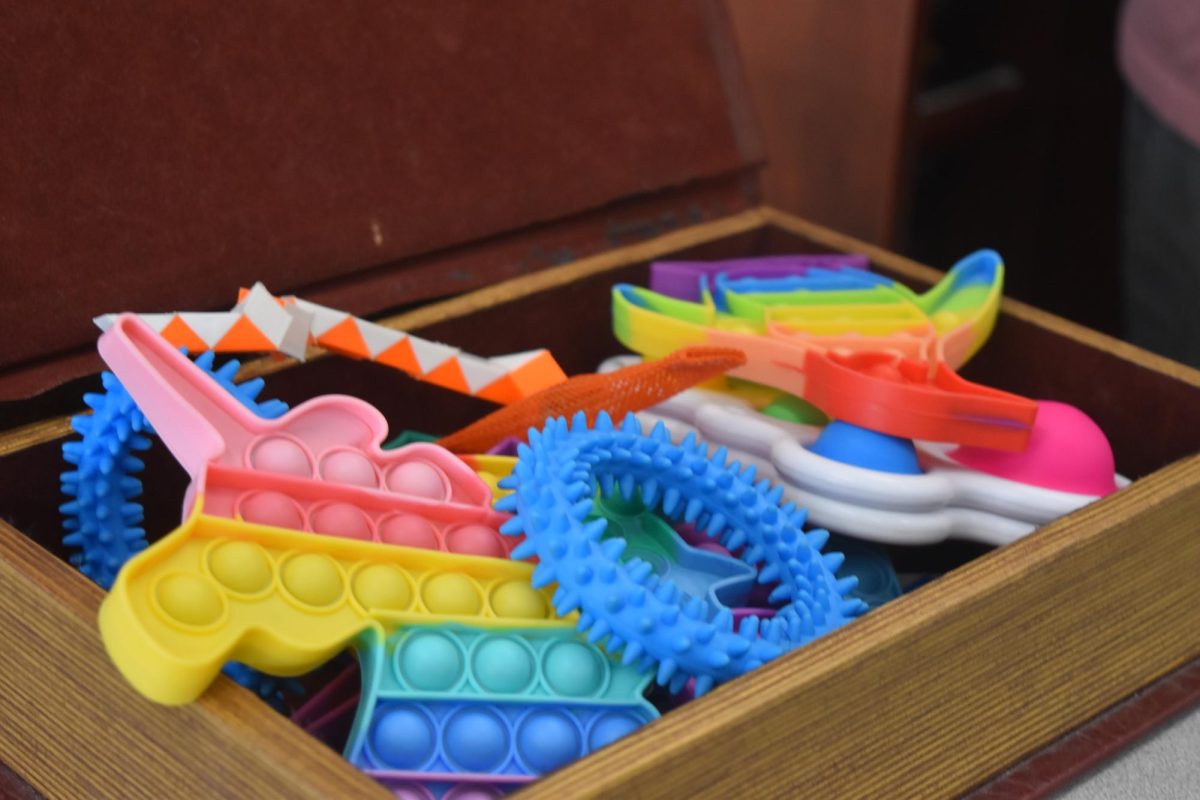
Thumbs tap under desks. Knees bounce in unison. A neon NeeDoh stretches and snaps back while a pop-it clicks softly during an English class.
In 2026, classrooms are anything but still. Motion is everywhere: a quiet, constant hum of hands that can’t stop moving. Once dismissed as distractions, fidget toys have crept back into teenage life, raising a bigger question: Are students more restless than ever, or have schools finally learned that focus doesn’t always look like sitting still?
2026 is the year of fidgets. Reviving from their circa 2016 popularity, they have once again become a staple of teenage classrooms. Whether students are twiddling their thumbs or squishing a NeeDoh, many struggle to stop moving.
Is this surge tied to increased ADHD diagnoses? Do teens simply need constant stimulation, or is it just another trend?
West Chicago Community High School English teacher Healy Rodman said she began using fidget toys after the COVID-19 pandemic to help students manage anxiety, noting their growing accessibility and inclusion in Individualized Education Programs, or IEPs.
“I figured having some on hand wouldn’t hurt,” Rodman said. “The collection has grown since then; some would say out of control, but it seems to help all kinds of students.”
Senior Ciana Ludy of Geneva High School shared her personal experience, explaining how fidget toys, like pop-its, help with focus and stress relief by keeping the brain occupied.
“I started using fidget toys in sixth grade during COVID, when I became restless,” Ludy said. “I was just really bored, like COVID just really got me going.”
For students like Ludy, fidget toys became less about novelty and more about adapting to a learning environment that felt unstructured and mentally draining. That need continues to translate into high school classrooms today.
“When I use my fidgets like my NeeDoh or my fidget spinner, it helps me concentrate on what I’m doing, and it also keeps me busy when a teacher is talking or explaining something,” senior Analuz Cuatzo said.
Teachers say that kind of self-regulation is exactly why fidget toys have become more accepted in classrooms.
“I really hope that students feel comfortable being themselves, knowing that I’m going to push them, but in a way that is tailored to them,” Rodman said. “Growth looks different for every single student. I want to see growth for everybody, but that doesn’t that’s not like one unifying thing for everybody.”
Rodman emphasized an approach centered on meeting students where they are academically and emotionally, rather than holding everyone to the same rigid standard. By creating a classroom environment where students feel safe expressing themselves, she believes she can challenge them more effectively. Growth, she explained, is not a one-size-fits-all benchmark; it varies based on each student’s needs, abilities and circumstances.
This individualized mindset reflects a broader shift in education, where success is measured not by uniform outcomes, but by personal progress and meaningful development.
“There are some students that have that little bit of physical movement occupying a part of their brain, which is super helpful,” Rodman said. “And then they can focus on more like mental processing.”
Rodman said that for some students, small physical movements can improve concentration rather than distract from it. Fidget toys provide an outlet for excess energy, allowing part of the brain to stay engaged physically while freeing up mental space for learning. By occupying that need for movement, fidgets help students focus on processing information, following instruction and staying present during class.
This highlights why fidget toys are increasingly viewed not as toys, but as tools that support different learning styles and attention needs. They help students pay better attention in class rather than being distracted by their phones, especially at WEGO, where students must keep their phones away to avoid distraction.