

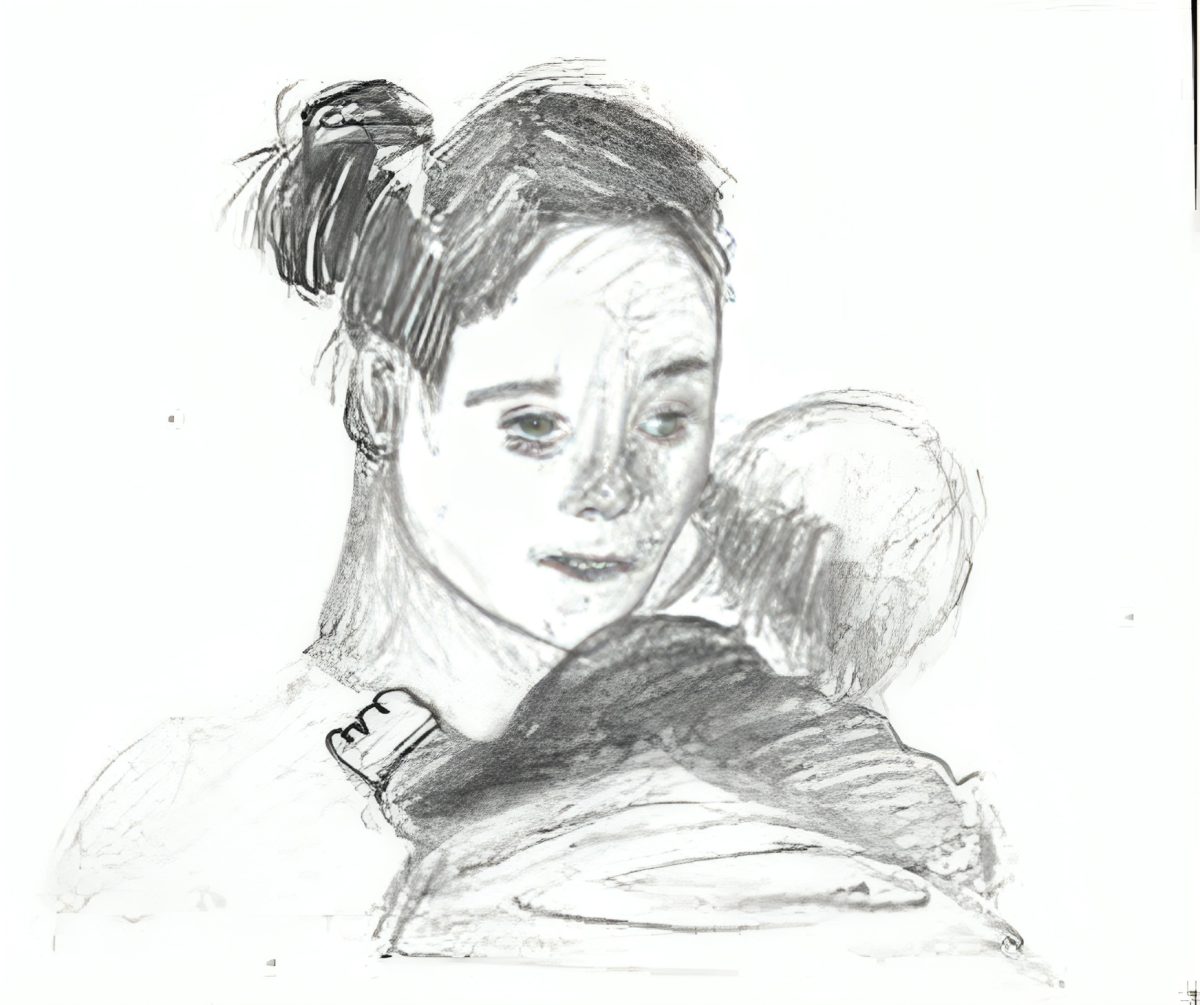
The average cost of having a baby in America is $20,416, and teachers, with an average salary of $71,495 are expected to take up to 12 weeks of unpaid maternity leave.
There is no federal law requiring workplaces to provide paid leave of any kind. The rules regarding maternity leave vary from state to state, and in Illinois, employees are only eligible for up to 12 weeks of leave. The Family and Medical Leave Act (FMLA) provides eligible employees with up to 12 weeks of leave during a 12-month period. The absence would be unpaid, but guarantees job protection. In order to receive FMLA, an employee must meet certain qualifications:
- The birth of a child
- Placement of a foster or adopted child
- To care for someone with serious health conditions
- A health condition that prevents the employee from serving their job
- Exigency due to military duty
While FMLA offers tenure for those recovering from birth, it ignores the fact that most U.S. families cannot afford to be without an income for 12 weeks, and that mothers are recommended to receive up to 26 weeks of maternity leave to fully recover and bond with their baby.
An article by USA Today explores the trend of teachers leaving their jobs after becoming moms, which poses the question: when 77% of teachers are women, why does the educational system, and the law, fail to provide them with proper maternity leave, and is it the result of an unspoken rule?
The United States is one of nine countries that lack any federal laws regarding paid maternity leave. The other countries include the Marshall Islands, Micronesia, Palau, Papua New Guinea, Nauru, Niue, Suriname, and Tonga.
“My guess as to why this time is unpaid is to not create an undue burden on companies,” government teacher, John Chisholm, said.
There are only 25 countries that have 100% paid maternity leave. Some countries in Europe require a minimum of two weeks of maternity leave, while countries like Bulgaria allow employees to be entitled to 410 days of paid leave.
Overall, most countries allow employees access to paid maternity leave, regardless of the profession.
The West Chicago Community High School District utilizes FMLA for staff going on maternity leave, or they have the option to use accrued sick days, which would allow them to have paid time off—as long as they are used immediately after birth, as decided by Dynak v. Board of Education of Wood Dale School District No.7.
“If they have 12 weeks worth of sick leave, they can use all 12 weeks and get paid for it. If they have one day, they use one day and the rest of the time is [unpaid],” Interim Executive Director of Human Resources (HR), Kerry Foderaro, said.
Foderaro does not believe that there is a trend at WEGO of teachers leaving the profession after taking a maternity leave of absence.
“We typically don’t see somebody, after they take FMLA, to not come back…maybe one teacher every other year,” Foderaro said.
According to Foderaro, in addition to maternity leave, staff at WEGO can request an extended leave up to one year, and can decide if that leave will be permanent by March 1; but there is a process: First they must make the request to their immediate supervisor, who will report to the principal, then HR, and finally HR would present the request to the Board of Education.
“I don’t think the federal government really needs or cares about my opinion, I would love to see parents have as much time as possible with their children,” Foderaro said.
According to Chisholm, there have been numerous student-led bills regarding maternity leave in the bi-annual government simulation at West Chicago Community High School.
“Students recognize how expensive and difficult it is to raise a child and any financial aid given to the mother would greater improve the quality of life for the new child,” Chisholm said.
English teacher Kelsey Wirkus has two young children, and two very different leave experiences. With both her children having spring birthdays, Wirkus was lucky enough to extend her leave into summer break both times; however, there was still struggle with her leave after her firstborn.
Wirkus was unable to use her accrued sick days for the birth of her first daughter in 2020, because Dynak v. Board of Education of Wood Dale School District No. 7. was ongoing, and admin was unsure of what would be allowed.
“They were like…’we don’t know what’s happening with the law’…so they were being very strict. A lot stricter than they had been in the past,” Wirkus said.

Since Wirkus is off during the summer, she had the opportunity to stay home with her children for a longer period of time—about four weeks longer than standard FMLA leave.
“I can’t imagine going back to work after 12 weeks. That is absolutely not enough time,” Wirkus said. “You are literally just recovering, you are just figuring out being a mom, and then to suddenly balance work…that is an overwhelming experience.”
Despite having both children in the springtime, Wirkus voiced that she did not feel pressured to have kids at that time, whether it be by work or society.
“I do not think teachers are encouraged to have kids at a certain time. There is such an uncertainty that comes with pregnancy that I know plenty of teachers who have children born in the fall or winter,” Wirkus said.
Wirkus expressed that she has a lot of friends that left the teaching field after becoming parents, but that had never been an option for her.
“I think that a lot of teachers leave because they don’t get paid enough…and they already maybe want to stay home…it just makes it like an easy choice,” Wirkus said.
Former French teacher Angela Vock had both of her children while working at a private institution, and had a different experience than Wirkus.
Vock had her first child in July, which led her to not need to take maternity leave, but when she had a second child in November, she took six weeks of paid maternity leave.
“[I] spoke to my principal and informed him that I wanted to take off the rest of the school year after having [my] second child, and that when I returned my dream scenario would be to work part-time,” Vock said. “I knew I was a teacher who brought value to the school and was confident that my employer would work with me. This isn’t often the case whether someone is working for a private company or a public school or otherwise.”
Similarly to Wirkus, Vock believes that teaching is a hard job, but not one she would be willing to give up.
“Sometimes I have felt that my students get the best of my energy during the day and then my family and in particular my kids get the scraps that are left, and I would imagine many working parents feel this way no matter what their career,” Vock said.
Vock said she put a lot of pressure on herself to not interrupt the school year, but ultimately, does not believe that teachers are expected to have children at a certain time.
“I would guess that teaching is still a profession with a majority of female workers but I don’t think that we are discouraged from taking maternity leave,” Vock said. “If anything, teaching as a profession allows for more flexibility than many professions when it comes to time off and having the same vacations as one’s children.”
So, there is no unspoken rule about exactly when teachers should plan their pregnancies around, but maternity leave for teachers still needs reform. Having a child in America is expensive, and the women, who make up over half of the teaching population, deserve compensation while on maternity leave.
“I think when we feel that we don’t have options and that we are stuck in any kind of system, it can feel draining, unfair, and stressful,” Vock said. “I don’t think there is a way to monetize the value of what parents provide. It’s also hard to measure the financial and productivity impact when an employee takes a leave of absence. In the end, I hope young people today aren’t scared off of having kids. There isn’t a perfect system but it’s an adventure worth taking.”