


Marijuana remains a topic of discussion among 18-year-olds in Illinois in 2026 as debates surrounding legalization and age restrictions continue statewide. (Photo by Arthur Waldow)
At 18, individuals can vote, sign contracts, join the military and be held fully accountable under the law. Yet, one legalized substance remains restricted for several more years: recreational marijuana.
As marijuana legalization continues to expand across the United States, some young adults have started questioning why they are considered adults in many legal situations but still cannot legally purchase cannabis until age 21. Others, however, support the higher age restriction because of concerns surrounding health, safety and brain development.
In Illinois, the current legal age for recreational marijuana use creates debate about how adulthood is defined under the law. While cannabis is legal for adults 21 and older, individuals between the ages of 18 and 20 remain excluded from regulated recreational access despite being considered legal adults in many other circumstances.
Some supporters of lowering the age argue that the restriction unintentionally pushes some young adults toward unregulated markets, where products are not always tested or labeled for safety. Johns Hopkins University notes that regulated cannabis systems can reduce certain risks by requiring testing and labeling standards for legal products.
Others argue that maintaining the age at 21 protects public health. According to the Centers for Disease Control and Prevention, marijuana use among younger individuals may affect attention, memory and learning because the brain continues developing into early adulthood. Critics of lowering the age also point to concerns about impaired driving, dependency and academic performance.
The debate reflects a larger question about adulthood and responsibility. Some people believe that if 18-year-olds are trusted to vote, serve in the military and take on financial responsibilities, they should also have access to regulated cannabis products. Others believe marijuana laws should follow similar age restrictions as alcohol because of potential health and safety risks.
The history of cannabis regulation in Illinois reflects changing public attitudes and policies over time. Cannabis became increasingly restricted during the early 20th century as states adopted stricter drug laws influenced by national anti-drug campaigns. A major turning point came with the Marihuana Tax Act of 1937, which effectively criminalized cannabis nationwide and contributed to the growth of illegal markets.
Illinois later legalized recreational marijuana for adults 21 and older in 2020. Since legalization, supporters have argued that regulated systems help reduce arrests and allow safer oversight of cannabis products, while critics continue raising concerns about long-term public health effects and youth access.
Some advocates of lowering the recreational age point to Canada, where several provinces allow legal cannabis access at 18 or 19. Some supporters believe these systems better align cannabis laws with the legal definition of adulthood. However, public health experts continue debating whether lower age limits increase risks for younger users.
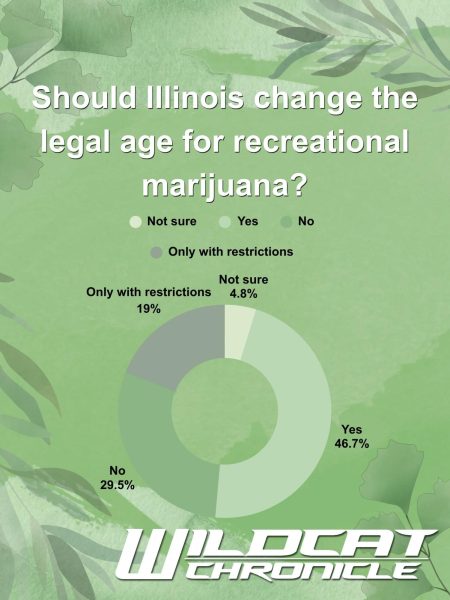
A 24-hour Instagram poll conducted by the Wildcat Chronicle in May 2026 received 105 responses from students. The results showed that opinions were divided: 46.7% supported lowering the recreational marijuana age, while 29.5% opposed the idea. Another 19% said they would support lowering the age only with additional restrictions, while 4.8% remained unsure.
The mixed results reflect the broader debate surrounding marijuana legalization and adulthood laws in Illinois. While some young adults believe legal responsibilities at 18 should come with expanded legal freedoms, others continue to express concerns surrounding health, safety and public well-being.
Historically, cannabis prohibition has not eliminated marijuana use entirely, but opponents of lowering the age argue that legalization policies should prioritize public health over consistency in adulthood laws. The debate continues to divide lawmakers, health experts and young adults as cannabis policies evolve across the country.
Whether or not Illinois changes the recreational marijuana age in the future, the discussion reflects broader questions about how society defines adulthood, personal responsibility and public health.