


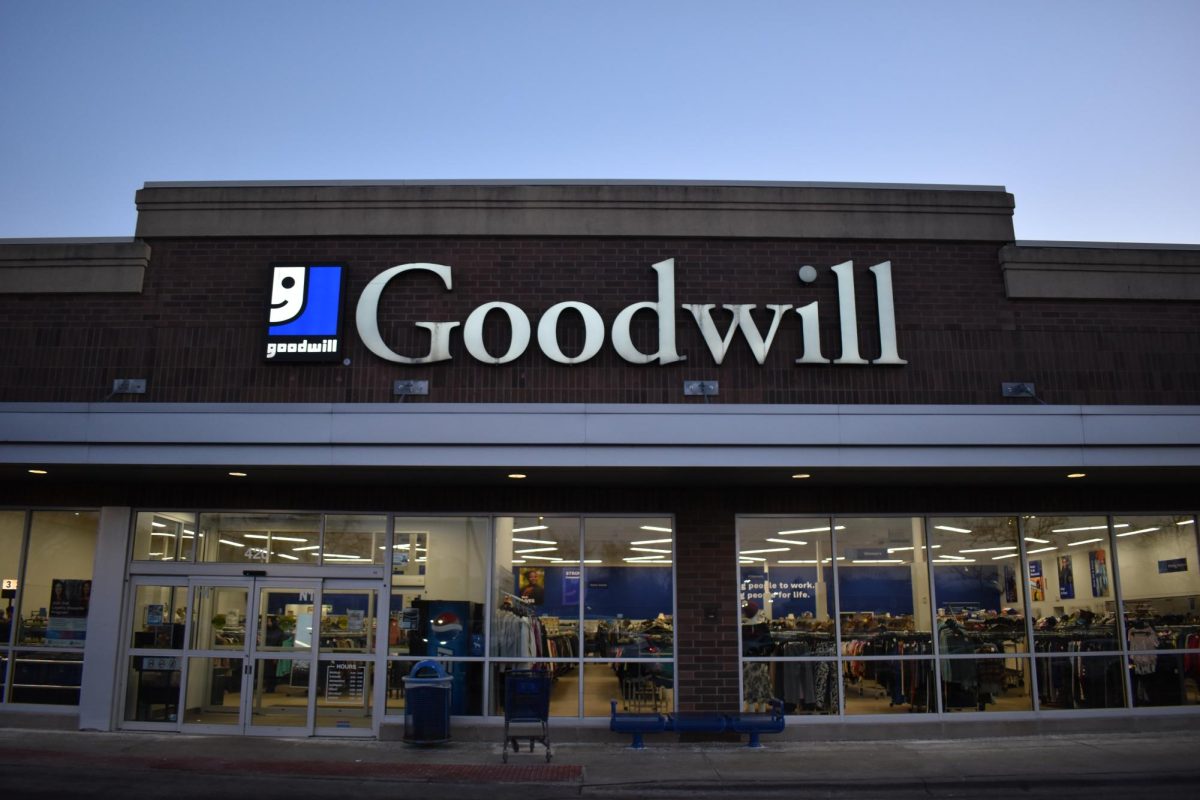
Shoppers often experience the excitement of finding the nicest, cleanest, best-looking pair of jeans — the kind that fits perfectly, like the conditioner to shampoo or ketchup to mustard. That exhilaration quickly fades, however, when the price tag reveals a cost far beyond their budget. Instead of paying full price, some turn to thrift stores like Goodwill, where they might find the same pair for a fraction of the original cost.
What is a thrift store?
A thrift store is a retail shop that sells used goods that are still in good condition for a discounted price. These stores primarily sell clothing, while also offering a variety of other items, including furniture, jewelry, technology and other household goods.
Why did everyone start thrifting again?
The thrifting market has seen a major boom in sales lately, almost doubling its economic growth since 2019. In an article by Forbes, the secondhand apparel market reached $48 billion in 2024 and has been growing steadily. The huge increase in traffic at thrift stores is due to a variety of reasons, and there are four main ones: price, combatting fast fashion, individuality and reselling.
Price:
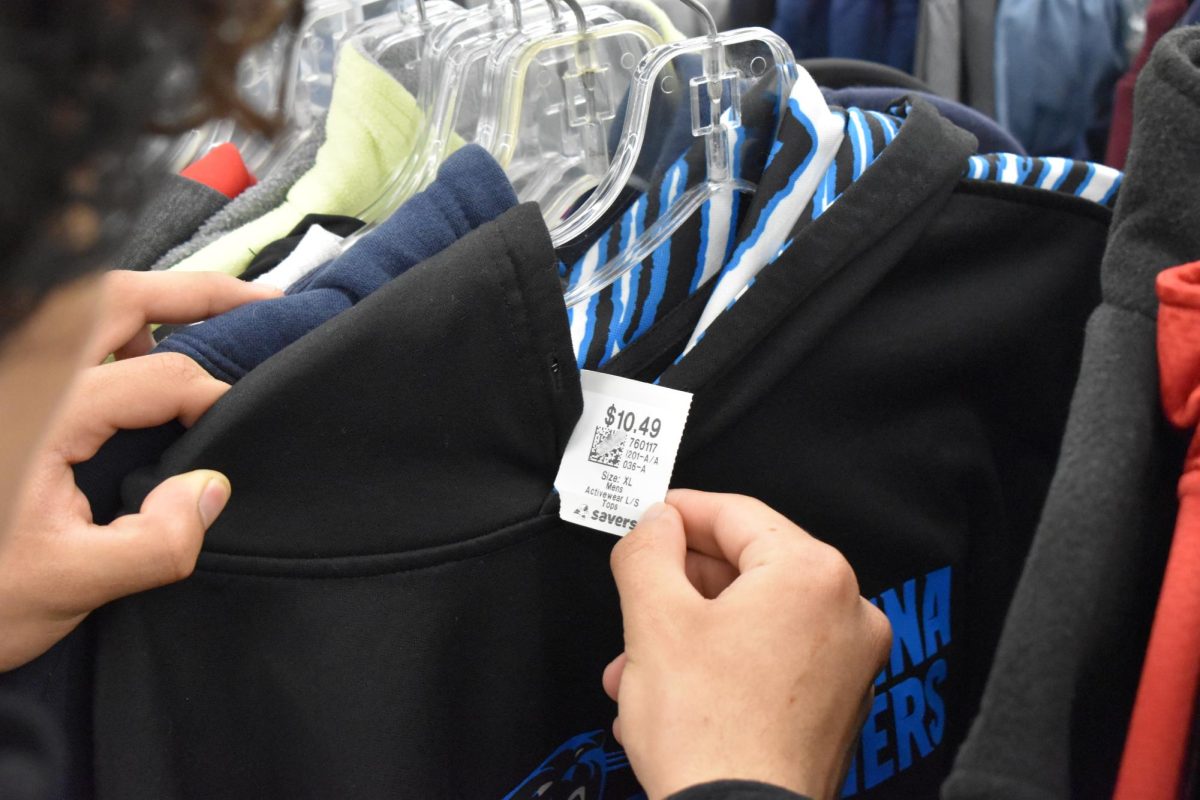
According to an article by ThriftTown, one of the most prominent reasons people go thrifting is because of the price. Prices at second-hand stores are significantly lower than regular stores found at a mall. Thrift stores offer a way to build a wardrobe for reasonable prices without having to spend hundreds on clothing.
“I don’t wanna spend 200 bucks on a jacket at a mall or something when I can just go thrifting for it. But it is harder to find but I think the price makes up for it,” West Chicago Community High School senior Adrian Perez said.
Although there is a trade-off for the cheaper prices — shoppers must hunt for the right pieces in the right size and style — many people are willing to take the time for the savings.
Fast Fashion:
One huge reason young people specifically go thrifting is to combat the rise of fast fashion in the industry. Fast fashion is a business model that produces clothing quickly and encourages overconsumption. Fast fashion rose in popularity throughout the 2010s, when people would buy clothing to wear for a short period of time, then discard it to move on to the next trend.
There are also many other concerns, including heavy environmental waste, issues in quality and questionable labor practices. These concerns include poor working conditions, extremely low wages and even child labor. Due to these reasons, many young people see thrifting as a form of passive activism against fast fashion.
“I think fast fashion is bad, like they make stuff for cheap but everything they are making is going to get thrown away and it’s just negative, it has a negative impact on the environment,” local resident Sebastian Nehoda said.
Personalizing Style:
Fashion and personal style are powerful ways people express who they are, giving them the freedom to show their identity through what they wear. First-hand stores release the same pieces and follow current trends. Many people are starting to move away from those trends and personalize their own styles through thrifting.
“I feel like there’s a certain aesthetic to people who thrift, like the clothes will be more baggy, it will be more random, and it’s not plain,” Perez said.
At second-hand stores, there is an almost unlimited variety of clothing — from different eras, brands that are not as popular and various cultures and subcultures. It is often easier to discover personal style at these stores because of the wide range of options. People want to express their individuality, and thrifting offers an accessible way to do that.
Reselling:
Some people have found a way to make extra income through thrifting. They are known as resellers and fully embrace the “treasure hunt” aspect of thrifting, searching for standout pieces. These pieces are usually vintage clothing that is still in good condition, and resellers sell them for a slightly higher price.
This offers a middle ground in pricing and works well for people who do not have time to search through second-hand stores themselves. Resellers maintain a curated selection of vintage clothing, usually selling online through platforms like Depop and Poshmark. Those more involved in the scene may host stands at pop-up vintage festivals.
“I would say I am a pretty big reseller. You know, I’ve been going to the bins and getting a lot of clothes just to post on my Depop,” Perez said.
According to Time Magazine, before the industrial revolution, clothes were viewed as much more valuable, where families would reuse them in every way possible. Then once the industrial revolution hit, clothing was able to be mass produced and made it less valuable. It became more affordable for families, and slowly had been seen as disposable once there was no use for it. After that, a stigma against wearing used clothes had developed where it was seen as a lack of money and gross. Now, consumers have better and more efficient ways of cleaning clothing. As clothing at first-hand stores start to increase in price again in the 21st century, more individuals and families are flocking to these second-hand stores in order to meet their budget.
Thrifting has obviously risen a lot in popularity lately, and it is expected to only grow even further from here according to CNBC. As clothing prices increase at first-hand stores due to inflation and tariffs, fast fashion continues to expand and more people seek individuality through clothing, second-hand stores are unlikely to disappear anytime soon.