

The student section is easily recognizable: it is the loud, energetic section to the far right of the football stands. With traditional themes such as white out, neon night, or more modern ones like Minion Night and safari, the section has become a staple of school spirit. But what other traditions did the school celebrate? Who plans them? And what is the SQUAD?
For many students today, however, the term “SQUAD” may feel unfamiliar, even though it has long been connected to school spirit at WEGO.
Pep Club is a senior-run organization that is typically in charge of assemblies and sporting event themes. With advisers Elizabeth Mastroianni and Mitch McKenna, Pep Club typically makes its grand entrance at the first home football game of the season. The group plays a pivotal role during Homecoming and the winter sports assembly at the start of the second semester. The gap between these two events leaves room for only a few meetings each month. During meetings, members discuss themes, design posters, and coordinate spirit activities.
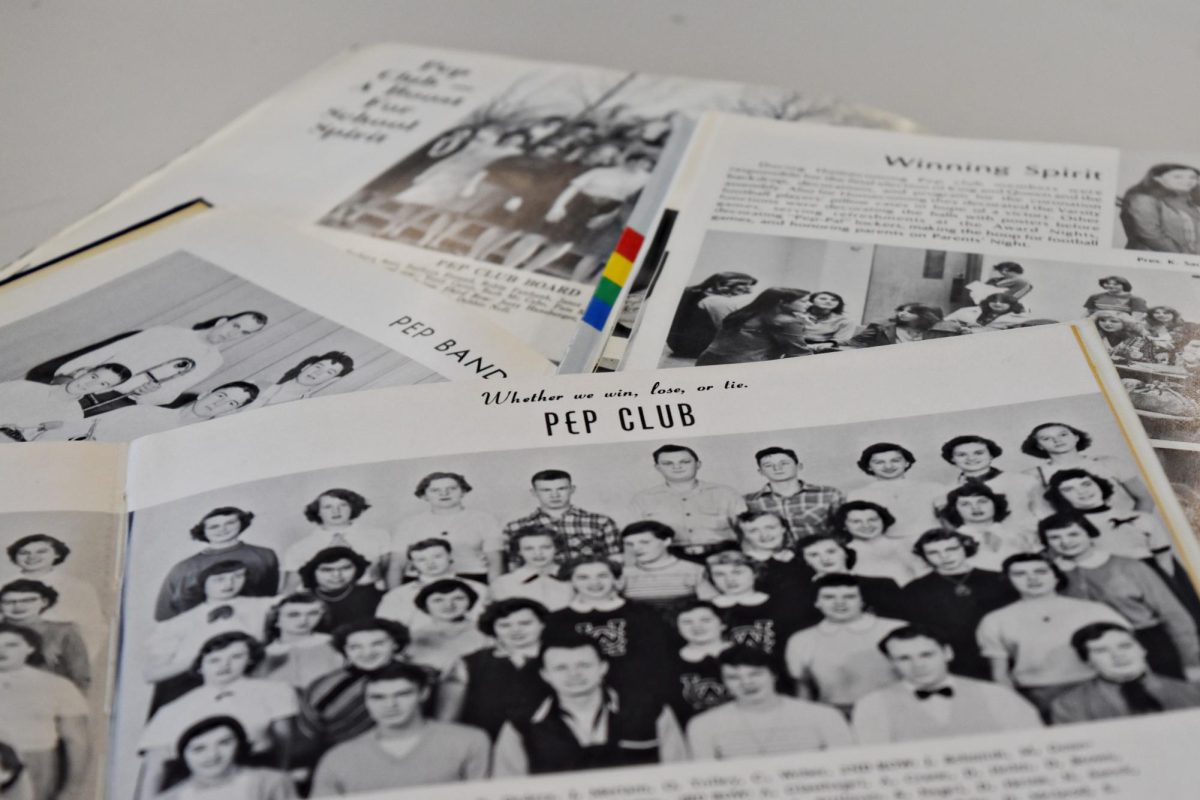
The self-proclaimed “Peppers” began the club during the 1925-1926 school year. The members who ran the organization raised money for athletic banquets, where students would eat and dance to celebrate athletic accomplishments. At the end of each school year, the Peppers would plant ivies outside the school to represent their success and spirit — but the tradition was discontinued after the 1930s.
Even in its earliest form, Pep Club was about more than events—it was about creating traditions students could identify with.
According to the 1927 WEGO yearbook, the early stages of the club were solely females who aimed to build school spirit throughout the year. Thanks to the yearbook archives, it would not be until the 1950s that boys were included in the organization.
As the club evolved, so did the way students participated in and represented school spirit.
Former Pep Club adviser Barb Laimins, who advised the club around 2000, said Pep Club once extended beyond a small senior group.
“Pep Club wasn’t just seniors: Student Council, cheerleaders, all grades [were] invited,” former Pep Club adviser Barb Laimins said.
Some classic events Laimins recalled were the Homecoming floats, which were built outside of school with the supervision of an adviser, decorating athletic lockers for home games, and a ritual.
“Pep Club would present a hidden embarrassment for luck [before a football game],” Laimins said.
The tradition, though strange, was one more way Pep Club created a shared identity around school spirit.
“My son used to play football here [at WEGO] and was presented with a teddy bear,” Laimins said.
Unfortunately, according to Laimins, administration did not see the tradition as harmless fun and discontinued it shortly after.
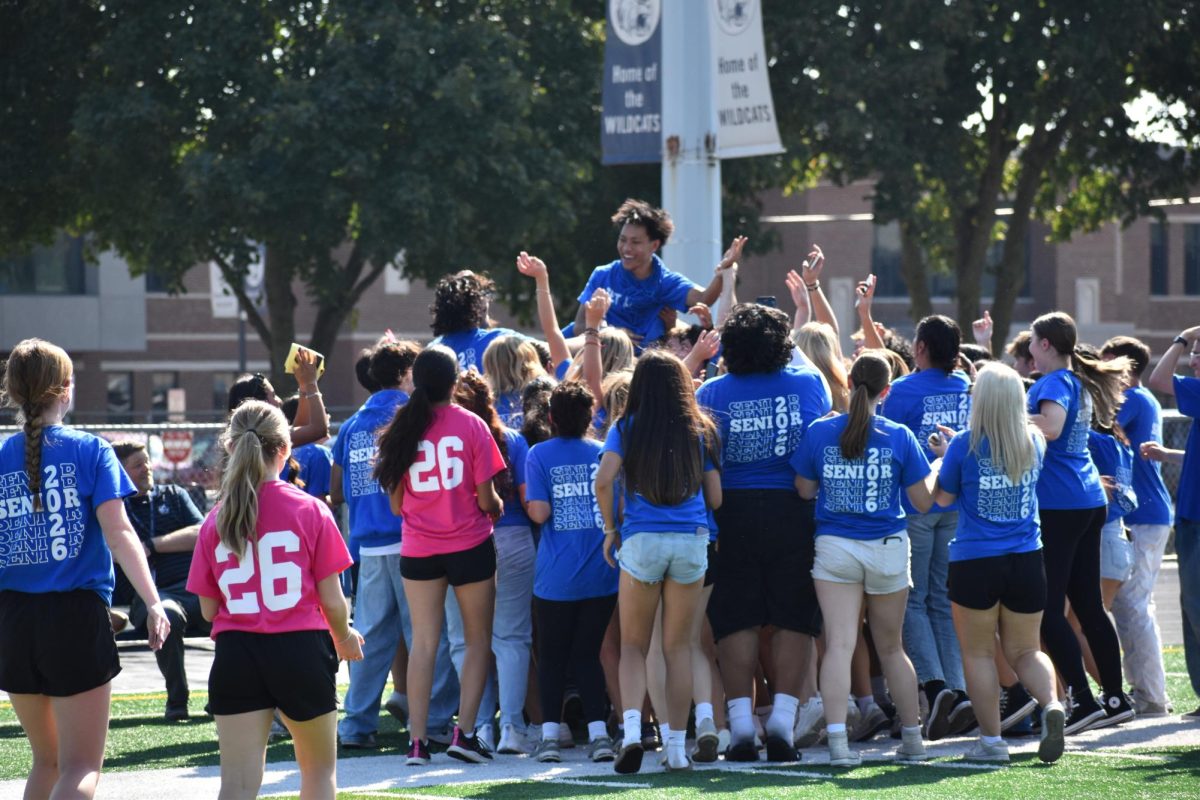
Pep Club members are seen celebrating on Memorial field during the homecoming pep assembly.
(Photo by Roxanna Santiago)
The fire department also prevented the continuation of an annual bonfire that students would attend after the Homecoming game. Students would walk from the high school to Reed Keppler Park for a nightly bonfire. The 1980 yearbook is the final yearbook to have this tradition before it was halted for safety concerns. Laimins mentioned that Student Council worked closely with the Peppers, representing the class teams and creating competitive events to earn bragging rights. Some of the many competitions included pumpkin carving, costume contests, and even window decorating for Homecoming. Student engagement would begin to falter as the school transitioned into the new millennium, partly due to the rise in technology and partly due to changing student interests.
Over time, several traditions have faded, including aspects of the SQUAD identity.
Though Pep Club still plays a visible role at major events, some of its most recognizable traditions are no longer as obvious to students today.
Even so, the purpose behind the SQUAD has remained consistent: bringing students together to support one another at games and school events.
“SQUAD is where the student body can join together to support their friends at all the different sporting events by cheering, bringing energy and noise and have a great experience together. The SQUAD is influential in giving you a home-field advantage in your sporting event,” McKenna said.
While many current students may not be aware, Pep Club still refers to the section as the SQUAD.
“The SQUAD, historically, has always been the group of students that supported the school. It doesn’t have to be Pep Club,” Mastroianni said.
That identity was once even more visible in the stands.
Mastroianni, a 2015 graduate, recalled the SQUAD having its own banner before it was replaced by the IHSA 2019 soccer champions sign.
“We did actually have SQUAD T-shirts that we would wear that would say, ‘freshman,’ ‘sophomore,’ ‘junior’ or ‘senior’ on the back,” Mastroianni said.
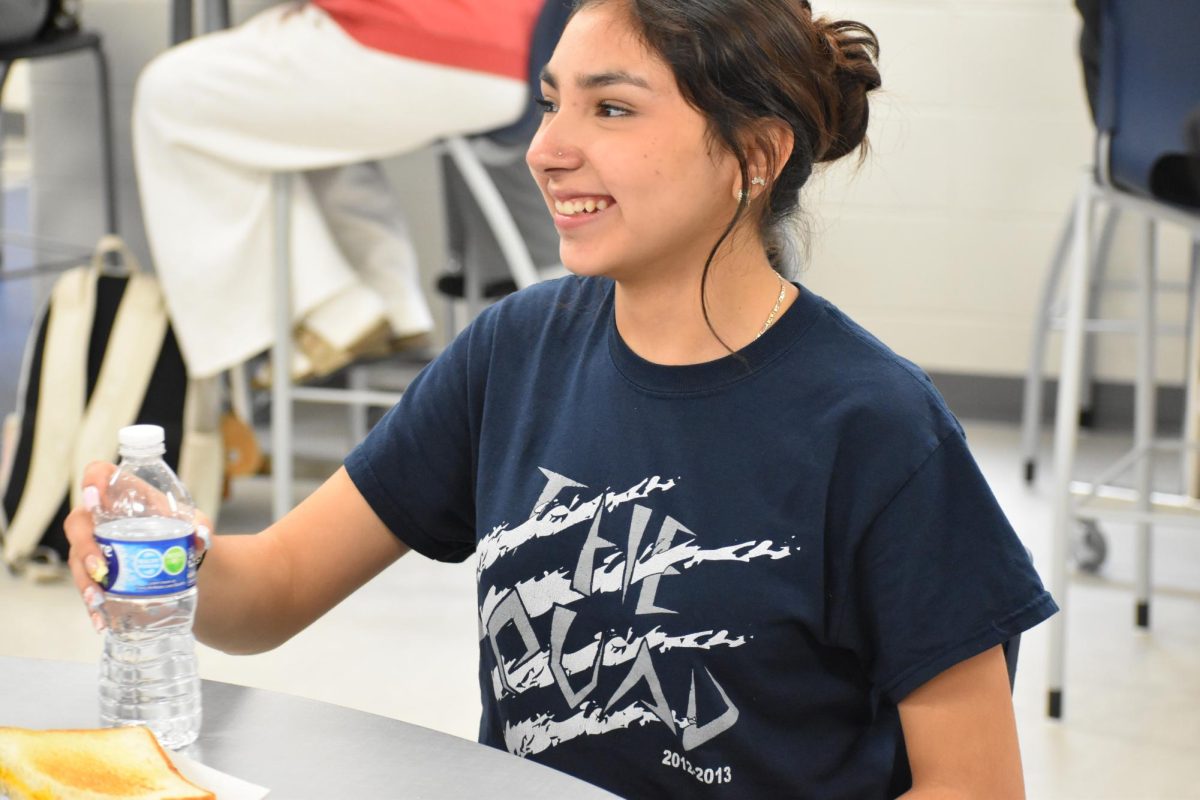
(Photo by Alondra Cardiel)
SQUAD shirts also gave students a way to personalize their place in the student section.
“That was my nickname in high school, and 17 is my favorite number. So everyone would pick a number and a nickname that they had or what they were called,” Andrea Cardiel said.
That personalization helped turn the SQUAD into more than just a section at games—it became an identity students could wear.
That visible identity, however, gradually began to fade.
“By the time I came back then, it was COVID…I think things shifted and changed, and so maybe that’s where the tradition got lost a little bit,” Mastroianni said.
As those traditions faded, the student section began to look different as well.
Participation also changed, helping explain why the shirts eventually disappeared.
“Less and less kids were purchasing them for a while. There were also some issues with what was appropriate and what was not appropriate. So then, student council moved to class shirts at a certain point, with each class having a different color, and that’s kind of where we’re at now,” Nick Kempski, director of postsecondary success, said.
The move to class shirts kept the idea of spirit wear alive, but it shifted away from the more personal identity the SQUAD shirts once gave students.
The class shirts are not customizable like the SQUAD shirts, but they offer the same spirit that they used to create.
To be a part of the SQUAD is to be a part of WEGO: a community within a community. While the current structure of the club might differ from the past, the true spirit lies within the students.
Though some traditions have disappeared, the history behind them shows that Pep Club was never just about themes or posters: it was about giving students a way to belong, and that spirit still defines the SQUAD today.


