




From the moment she became in touch with her taste buds, high school senior Guadalupe Perez put the word “no” to use at the dinner table. Turning down practically every meal that was given to her, Perez resorted to the few foods she was willing to eat.
“My picky eating started [when] I was a kid. I wouldn’t eat a lot of things. I would eat cereal all the time because I hated everything else. Now that I’ve grown up, I’ve grown into things a little bit more, but I still struggle with it,” Perez said.
What some deem to be poor eating habits is actually the result of certain environmental and psychological influences that Perez and many other picky eaters like her share.
Although picky eating does not have a specific definition, people who live with it often have common experiences. According to the National Library of Medicine, “[Picky eating] is generally accepted to include rejection or restriction of familiar foods and unfamiliar foods, and thus includes an element of neophobia. To add further complication, there are a variety of tools used for the assessment of picky eating, and consequently, there is a wide range of prevalence reported.”
Whether the weird green of a pickle grosses one out or the slimy consistency of yogurt triggers sensory issues, the causes of picky eating are endless. With a large prevalence in early childhood, selective eating habits continue in later years for around 50% of children, according to SOS Approach to Feeding.
Fussy eating often stems from levels of adventurousness, fear, and external influences that begin in early childhood. Some naturally grow out of pickiness, some are forced to, and others carry it on in their adult lives. According to Managing Editor Rachel Ehmke of Child Mind Institute, “[S]ome kids smell and taste flavors more intensely than other people and that turns them off a lot of foods. Some kids have anxiety about food or specific foods. The longer a child’s picky eating habits go on, the harder it is to get them to eat foods they’ve been avoiding.”
This suggests that pickiness is not just stubbornness: it is often rooted in biology and sensory processing differences that make certain foods feel genuinely overwhelming.
“My parents [tell me] to try [food], and then I try it and I feel so nauseous, it makes me physically sick. I really hate certain foods. I can’t grow into them no matter how much I try,” Perez said.
While there is no definite answer to when picky eating becomes a concern, or an age considered “normal” to stop certain habits, there are telltale signs of someone who may be less willing to eat certain foods.
“Oftentimes, we’ll see a baby, let’s say under two, might start eating solid foods, might be really adventurous, love all sorts of things, and not really care,” registered dietitian at Rising Root Nutrition Rebecca Magnuson said. “And then we kind of see once a kid can start to say, “No”, we start to see a little bit more selectiveness come up with their picky eating or their choices.”
That early sense of control – saying “no” for the first time – often becomes the foundation for lifelong eating habits. For some, that independence turns into curiosity; for others, it solidifies fear or resistance toward unfamiliar foods.
Amid the psychological factors behind picking eating, certain experiences and diagnoses, such as avoidant restrictive food intake disorder (ARFID), eating disorders like anorexia, and cultural or familial influence, can greatly affect these habits.
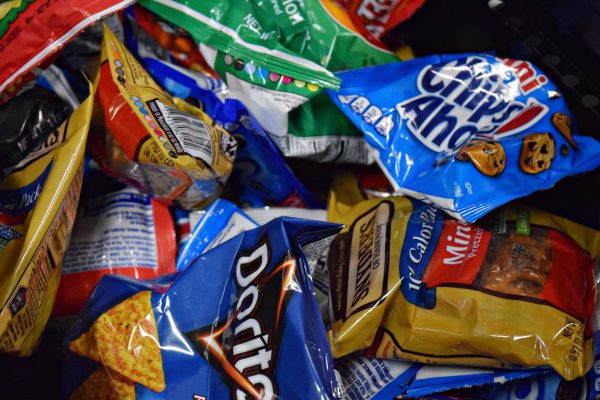
No monsters under the bed, but on the plate.
Extremely picky eaters who are unable to change their dietary restrictions without treatment are typically medically diagnosed with ARFID. People living with avoidant restrictive food intake disorder usually fall into the three subcategories of this diagnosis: sensory-based restriction, fear and concern, or low interest in eating, according to Beat Eating Disorders.
Sensory issues, including the texture, smell, taste, or look of certain foods, can push people away from trying or eating them. For example, some people avoid foods with slimy or grainy textures, and although they might prefer the taste, the feeling leaves them uncomfortable and nauseated. Stanford Medicine highlights that people with ARFID “may not eat food items with a particular color, aroma, texture, or even brand name. Instead, they may only eat foods with a certain consistency.”
“If a texture is bad, I can’t eat it. If it smells weird, I can’t eat it. Like steak has to be really well-cooked or else I will not eat it. It grosses me out. Or even with chicken – the squishy part – I can’t eat it. It makes me feel like throwing up,” Perez said.
These sensory reactions show how physical and psychological responses to food can blur together – what might look like “pickiness” from the outside can actually be a genuine stress response.
Others may not find eating necessarily enjoyable, although not correlated with body image or weight concerns. Simple cues that the body is hungry may not register to these people, or they may feel as though making food or eating is more of a chore than a pleasure. As a result, many fall back on “safe” foods – items that feel predictable and non-threatening. Establishing safe foods might help short-term comfort, but it can reinforce avoidance and anxiety over time – making recovery even harder without professional help.
Not all picky eaters can control how they act or feel, especially those with ARFID who actually require medical help to lower their fears and unease, as well as maintain physical and social well-being. According to Cleveland Clinic, “[t]he consequences of ARFID can be life-threatening. Sometimes, a person diagnosed with ARFID won’t have any signs or symptoms because their body adapts to stress,” and “[t]his can affect your relationships, and can even distract you from work or school responsibilities.”

Pickiness can bloom from broken roots.
Though eating disorders such as anorexia and bulimia focus more on body image issues, some of these habits can cross over and leave an everlasting impact on those who experience them.
Anorexia nervosa primarily involves restrictive eating, calorie counting, and broken relationships with eating. As Johns Hopkins Medicine puts it, “[w]ith anorexia, you may use abnormal eating habits to cope with stress, anxiety, and low self-esteem.” These symptoms, even after the disorder is treated, can linger, causing long-term selective eating.
“A lot of eating disorders come from because you don’t have control over anything else,” school nurse Cathy Collins said. “Let’s say something big happened as a kid, like you were molested, very dominating parents, so the only thing you can control is food, and that’s how they become anorexic. So those are very picky things other people [experience].”
Though anorexia and ARFID differ in their causes, both reveal how deeply emotional and environmental factors influence eating behavior. Control, comfort, and fear often intertwine in ways that go beyond hunger or taste.
Although these eating disorders are less likely to be caused by food preferences and pickiness, after-effects can lead to a narrow palate and create the same rotation of “safe” foods that people with ARFID cycle through.
According to the Cleveland Clinic, “everyone has their own connection with food — your favorite things to eat (or avoid) are unique to you. It may be difficult to see when an eating disorder is present because you’ve grown accustomed to it.”
“You still need nutrition, and you still need to hit those food goals,” culinary teacher Emily Renteria said. “I think a common misconception for high schoolers is to not eat at all, which is the opposite of what we’re trying to do. I think that plays into the picking eating role. Or, when people don’t want to eat, it’s not because they don’t like the food, it’s because they’re restricting themselves.”
In both cases – whether through fear or intentional restriction – the act of eating becomes charged with emotion, revealing just how complicated our relationship with food can be.
Sometimes parents are to blame.
Aside from mental restriction, some picky eaters do not eat a variety of foods because they were never introduced to them, raised by selective eaters, or never pushed to try new things.
Typically, parents who do not eat many foods pass down their habits to their children, creating a very small outlet for kids to venture out or be inspired to in their adult lives. According to UCSF Benioff Children’s Hospitals, “children develop picky eating habits by modeling their parents’ fussy eating habits. Picky eating habits are more likely to develop when parents punish, bribe, or reward their children’s eating behaviors. The goal for feeding a picky eater should be to try new foods and to keep food from starting a battle.”
This pattern shows how easily pickiness can be learned behavior rather than an innate preference – children copy what they see, especially around something as social as food.
“Research shows that a lot of the pickiness can come from parents, because that’s how you were raised,” Collins said. “You were raised not to try something new, not that your parents even kind of knew what they were doing. But it’s better to try everything.”
Eating and cooking foods from multiple cultures that include global tastes, textures, and combinations opens up one’s drive to try new foods and venture out. Without an environment that encourages these habits, it may be harder to willingly expand a food palate.
“People are definitely missing out on culinary [delights] that they haven’t tried,” senior Manuel Figueroa said. “If it gets to a point where you genuinely don’t want to try it, go the extreme route and have a bag ready if you want to throw up. If you’re not allergic, I don’t think it would hurt to try.”
Certain cultures may also normalize diets that others find exotic, or limit foods due to religious reasons, such as Judaism and Islam, which prohibit eating pork. According to Emily Rose Jordan of BrainFacts.org, “[O]ne simply has to look at what people eat around the world to find evidence that food preferences vary extensively. In Iceland, a traditional dish called hákarl is made by fermenting the meat of a poisonous shark, while in Scotland, there is a holiday devoted to haggis.”
These global examples underline how subjective “normal” eating really is. What seems unthinkable in one culture can be a delicacy in another, reminding us that pickiness often reflects familiarity more than disgust.
“I really think it comes from how we were raised culturally, because certain cultures don’t eat certain foods, and then the kids are too afraid if they want to branch out of that culture to try something. One thing is neophobia – that’s a real thing with kids not wanting to try something new,” Collins said.
On the other hand, kids who grew up around cultural influences and families with cooking talents may be more prone to eating a variety of foods.
“When I was a child in Puerto Rico, I would eat cultural foods like rice, beans, steak, salad, [and] fried plantains, which are typical there. And I never complained, my grandma would make really good food, and I would just eat it. In fact, I saw my parents eating something that I haven’t tried, and I would just ask them to try it. I’m pretty open to everything,” Figueroa said.
Exposure, encouragement, and curiosity all play major roles in shaping a person’s openness to food. The more positive experiences children have at the table, the less intimidating new foods become later in life.
Picky eating is not dramatic – there are real concerns.
While picky eaters often develop routines that they see best fit for their diets, there are social and nutritional concerns.
Eating out with family or friends, meeting people of different cultures, or trying to enjoy meals without anxiety can be difficult for fussy eaters.
“It starts to become more concerning if it’s really starting to inhibit socialization,” Magnuson said. “Especially our clients who are high school age, where [they] really just want to be able to go out with friends and eat whatever [they] want. If we start to notice more anxiety and stress around going out for meals or the idea of trying something new, creating more of a visceral reaction, that’s when we start to think there might be something a little bit deeper going on.”
Her insight highlights an often-overlooked reality: picky eating is not just a private quirk. It can shape friendships, dating experiences, and family life in subtle but significant ways.
Feeling embarrassment for ordering basic meals – sometimes off the kids’ menu – or guilt when one does not want to try a food made for or given to them may lead to a sense of awkwardness or exclusivity for people with selective eating.
“It’s super hard for me to go somewhere nice and actually enjoy the food because I’m so picky,” Perez said. “I always get embarrassed when I’m with other people and I [ask] where the kids’ menu is. Sometimes it makes me feel overstimulated because it’s so hard to choose what to eat.”
That kind of embarrassment captures how food connects to identity. Meals are not just nourishment: they are moments of belonging, and being “different” can feel isolating.
Missing out on key nourishing factors is also a common consequence. In a study reported by Cambridge University Press, “picky eaters had lower intakes of meat, fish, fruit and vegetables than non-picky eaters, and this was reflected in lower intakes of iron, zinc, carotene and dietary fiber, with substantial proportions below the RNI for iron, zinc and dietary fibre.”
The data suggests that pickiness does not just affect taste buds – it can have long-term effects on growth, energy, and concentration, especially during the teenage years.
“A big area that people are lacking in, at least in my practice, is fiber, because a lot of individuals are more fearful around fruits and vegetables and some of those higher fiber foods. What I see is more digestive complaints. Vitamin D can be another one that’s pretty low, but that’s commonly a lower nutrient,” Magnuson said.
Because nutritious foods such as meat and vegetables have unique textures and tastes, as well as possibilities of being cooked poorly or rotten, they can easily turn away picky eaters and lead to unhealthy eating habits.
“Kids are now starting to eat more and more processed meats, which aren’t as nutritionally sound as carcass meat,” Collins said. “It’s the dietary intake. More people who are picky eaters have worse constipation. And then if you don’t have a lot of carcass meat, you have low iron, which can affect you being tired, which means you don’t want to be in school, and you’re exhausted from sports and everything else.”
These health effects remind us that eating habits are not just personal: they ripple into classroom performance, mood, and overall well-being.
Additionally, physical health can be affected by a lack of nutrients and a selective diet.
“From a more physical standpoint, we would look at [if] they [are] falling off of any growth curve that we’re expecting for them,” Magnuson said. “That is a really big marker for, ‘are you growing effectively?’, rather than looking at specific weight or height. It’s more [about] meeting your own individual expectations that your body has somewhat predetermined.”
Whether caused by fear, upbringing, or simple preference, picky eating is more than a childhood phase. Understanding the reasons behind selective eating can help people replace guilt with empathy—both for themselves and for others. As Perez put it, learning to eat without anxiety is a lifelong process, one meal at a time.


