

ChatGPT. Claude. Gemini. As artificial intelligence tools become increasingly common in classrooms, students and educators are debating whether these platforms support learning – or replace it. AI is doing more harm than good in schools right now because students are misusing it. While some argue that AI can be a powerful academic tool, others worry it may be doing more harm than good.
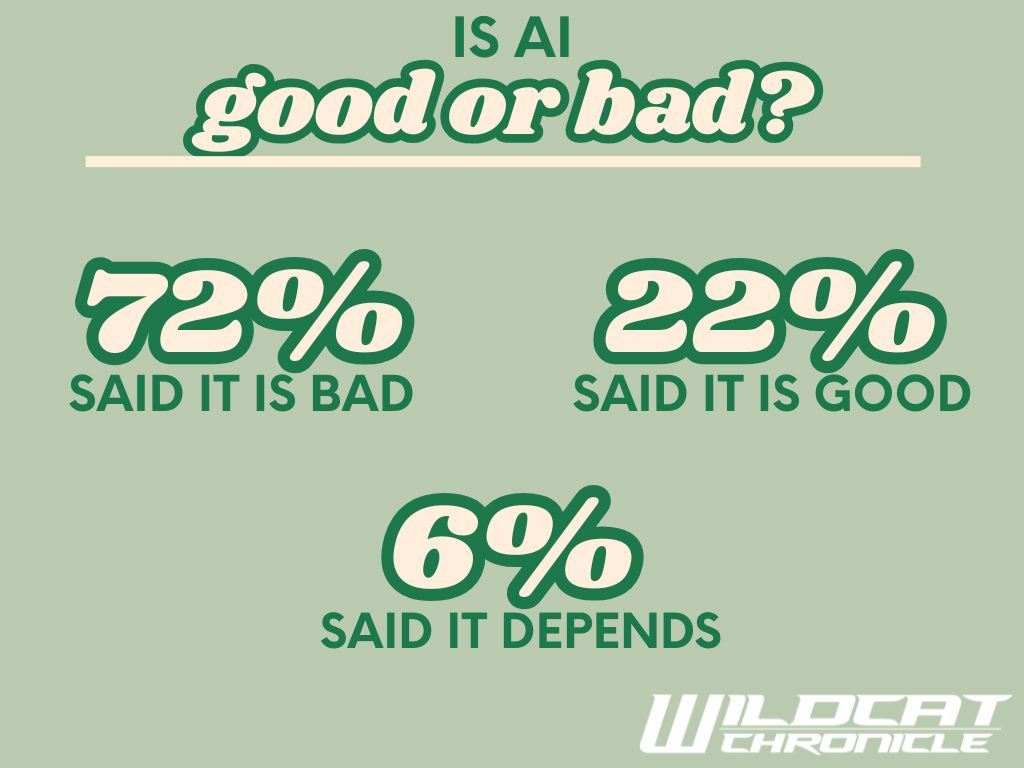
AI has quickly come to dominate our society in the years shortly after COVID (2022–2023) to the present day. First, it started as a recreational tool, but it has quickly diffused into other areas, a prominent example being schools. Yet, most of this usage of AI is negative.
When students use AI for schoolwork, they usually do not use it as a booster to continue on their own. They just ask ChatGPT for answers and copy that word for word, and they really learn nothing. For example, a student might use AI to generate an entire response or solve a problem without understanding how to do it themselves.
“When kids use generative AI… they are not thinking for themselves,” Rebecca Winthrop, one of the report’s authors and a senior fellow at Brookings, said to NPR.
Others make the argument that there are things AI can help students with, and this is true. If students use AI correctly, there would certainly be no issue.
“AI should support learning, not replace the thinking and effort students need,” Michael Healey of Discovery Education said.
While AI can be used correctly, it is more often than not used incorrectly. Most kids won’t do something on their own when they have AI at their fingertips.
“It’s easy; you don’t need to use your brain,” a student said to researchers at Brookings.
Kids can just lay back and do nothing. This can really harm their learning process. If we as a society do nothing, our future generations will grow up without the correct education that everybody else before them received. Students need to start using AI as a tool to support their learning, not as a shortcut to avoid doing the work. This change can still happen; it’s not too late. Now is better than later.