

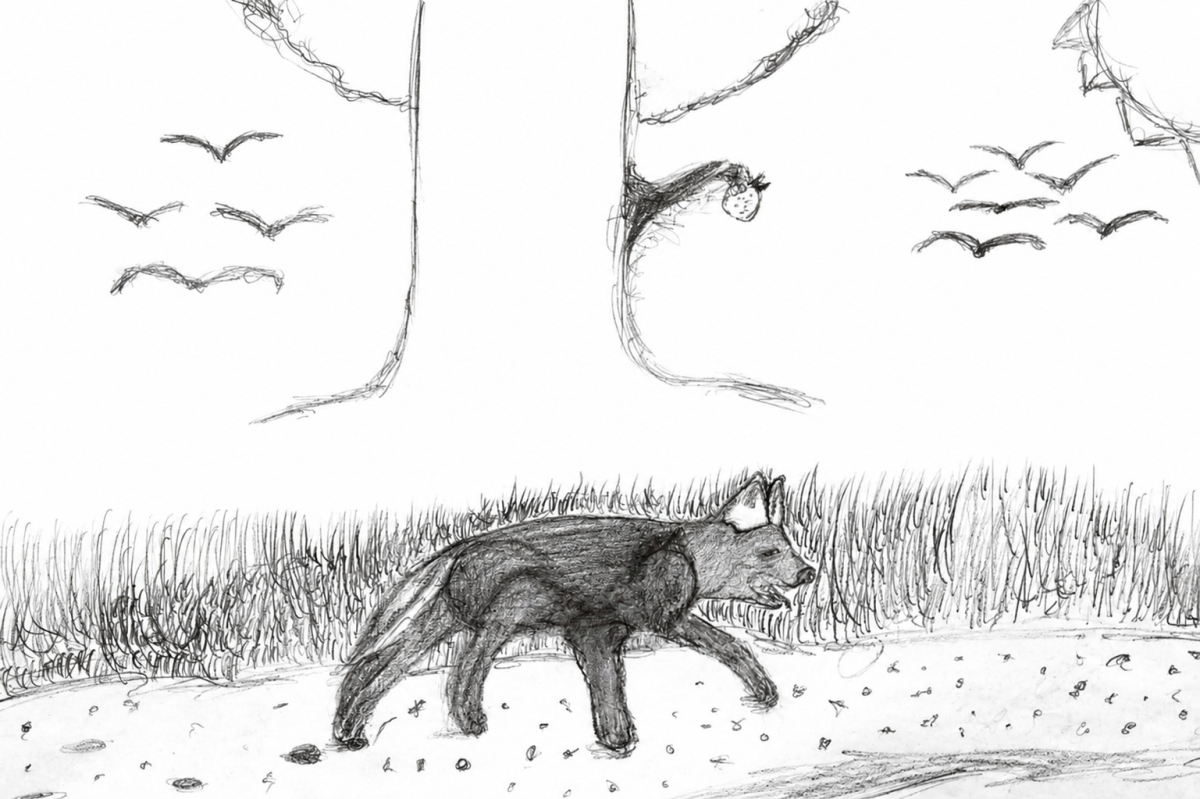
Residents across DuPage County have reported seeing and hearing coyotes more frequently in recent months as breeding season and suburban expansion continue to push wildlife closer to residential neighborhoods.
Changes in behavior during mating season can make coyotes more visible and active near residential areas. According to the SouthWest Wildlife Conservation Center, coyotes become more vocal during breeding season, often using howls, yips and barks to communicate and establish territory.
“During mating season, you might hear more coyote sounds, howls, high-pitched yips, and dog-like barks,” the Southwest Wildlife Conservation Center said on its website. “Sightings are also more common this time of year as coyotes roam in search of partners.”
Wildlife officials say this increase in activity is often tied to the coyote breeding season, which typically occurs between January and March. During this time, coyotes become more active as they search for mates and establish territory. According to the DuPage County Forest Preserve District, coyotes are native to the area and have adapted well to suburban environments over the past several decades.
Coyotes are most active at dawn and dusk, although daytime sightings are not considered unusual. Their ability to survive in both rural and urban environments has contributed to a steady increase in sightings throughout the Chicago suburbs.
“I see them on an everyday basis, the coyotes,” Chicago resident Gisela Zavala said to CBS News in May 2025.
Experts say coyotes are especially successful because of their adaptability and reproductive habits.
One of the biggest issues with coyotes is not even their violent tendencies; it is their “unique, amazing ability to reproduce,” Heather Gaya of the Warnell School of Forestry and Natural Resources said in an interview published by UGA Today.
As development continues and wooded habitats become smaller, coyotes are increasingly moving into neighborhoods in search of food, shelter and territory. Across the United States, coyotes have adapted to urban and suburban areas by learning to avoid humans while still taking advantage of nearby resources.
“Coyotes are unique in the sense that they are, in some ways, immigrating into cities, looking for more opportunities for resources or habitat with less competition from other predators,” journalist John Yang said in the PBS report discussing urban coyote populations.
Local residents have also noticed increased activity. Joanna Mooberry, a volunteer with the DuPage County Forest Preserve, described coyotes as “smart creatures” and said she has heard coyotes howling more frequently in recent months. She also noted seeing coyotes roaming through neighborhoods near pets, although she said they had not damaged property.
West Chicago Community High School horticulture teacher Corrie Stieglitz believes human activity may also contribute to the increase in sightings.
“They’re being fed and the natural predators aren’t going after them, so they’re able to make more babies,” Stieglitz said.
Wildlife experts generally encourage residents not to feed coyotes intentionally or indirectly by leaving food outdoors. The DuPage County Forest Preserve District also recommends supervising pets outdoors and maintaining distance from wildlife when sightings occur.
Although increased sightings may concern some residents, experts emphasize that coyotes are now a permanent part of suburban ecosystems throughout DuPage County and much of the Chicago area.