


California Democrats gathered to celebrate the victory of Gov. Gavin Newsom’s Proposition 50 on Nov. 4, while controversy simmered among the public.
Starting in 2026, new legislatively drawn congressional district maps will be established — the new maps will be utilized until the California Citizens Redistricting Commission draws new ones in 2030.
Before Proposition 50 passed, California voters pushed to protect their communities by voting yes on Prop 50.
“The Associated Press and national news networks had already proclaimed that Proposition 50 would pass handily, with voters agreeing to temporarily suspend California’s independently drawn maps and adopt ones gerrymandered in favor of Democrats,” Maya C. Miller of CalMatters said.
Proposition 50 is viewed by supporters as beneficial for Democrats, who say it allows them to counter Republican efforts on issues such as health care access and immigration enforcement. Opponents, however, argue that the measure creates an unfair political advantage and undermines the state’s independent redistricting system.
The campaign surrounding Prop 50 was highly partisan, with each side framing the measure as either a protection of democracy or a threat to it.
“I think it’s escalating the problem between Democrats and Republicans – like separating [them],” Government teacher at West Chicago Community High School, Candace Fikis, said. “I think it’s just making more polarization between those parties.”
Newsom previously stated that this special election was a vote against President Trump.
NPR cites recent data from Prop 50’s polling campaign showing 90% of Democrats supporting the measure, while 90 percent of Republicans opposed it.
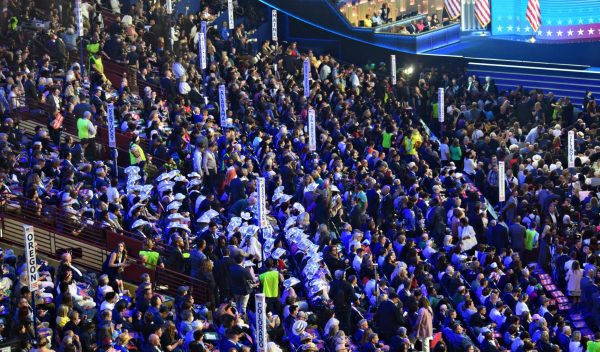
As the midterm elections approach, U.S. states are beginning to pick up the redistricting concept after states like Texas redrew their districts in favor of Republicans. Because of this, California adopted a similar approach — but with maps drawn in favor of Democrats.
The motive for redistricting is that many states want to control the House of Representatives, as it also boosts one political party over the other.
Gerrymandering has been a common practice historically, and now U.S. states are frequently using this practice to manipulate political boundaries in favor of one party.
Essentially, this goes back to the founding fathers when Elbridge Gerry redistricted after he lost the election in Massachusetts. Shortly after, his redistricting succeeded, and his political party was able to keep control of the legislature.
“I just hope it doesn’t lead to some corrupt redistricting,” Government teacher Brigid Clark said.
Certain individuals may think that gerrymandering can be done in a positive manner, yet other times it’s seen as a corrupt way because district lines are drawn unfairly in order to favor one political party. Using gerrymandering to redistrict can be a threat to democracy, as it can result in escalating the conflict between the two parties.
While this is a temporary solution until 2030, it may drive other U.S. states to follow this law.
“I think that we should have followed what the Census does and the history over the last 200 some years,” Fikis said.
Correction
Nov. 18, 2025
This article has been updated to correct AP Style date formatting, clarify language for neutrality, and revise grammar. Copyrighted photos were replaced with properly licensed images, and source attributions have been added.