


Joselyn Duran Corona is a reporter for the Wildcat Chronicle who occasionally writes opinion pieces. The views expressed here belong solely to the author.
For many immigrants, an encounter with Immigration and custom Enforcement is one of the most frightening moments of their lives and the uncertainty of what comes next- detention, separation from family, or even violence- leaves lasting scars. Body cameras will not erase that fear, but they could ensure that what happens in those moments is fair, documented, and accountable.
For years, the debate over body-worn cameras has revolved around privacy. Supporters insist that cameras protect both law enforcement and civilians by providing an objective record of what happens in the field. But what if privacy is not the real issue? What if the greater danger is the lack of documentation when encounters that end in violence are left to the conflicting memories of those who survive them?
In early September 2025, ICE launched Operation Midway Blitz: the alleged focus was to target immigrants with criminal records. The operation has sparked many lawsuits alleging aggressive enforcement actions – some resulting in deaths of people with no prior criminal records.
One case, reported by NBC News, involved Silverio Villegas Gonzalez who was fatally shot by ICE agents on Sept. 12,. According to the agency, one officer was injured after being dragged by Villegas Gonzalez’s car as he attempted to flee. However, body-camera footage later obtained by the media showed key details, one agent reportedly told a Franklin police officer that his injury was “nothing major”, None of the agents involved in the shooting were wearing a body-camera at the time, NBC reported.
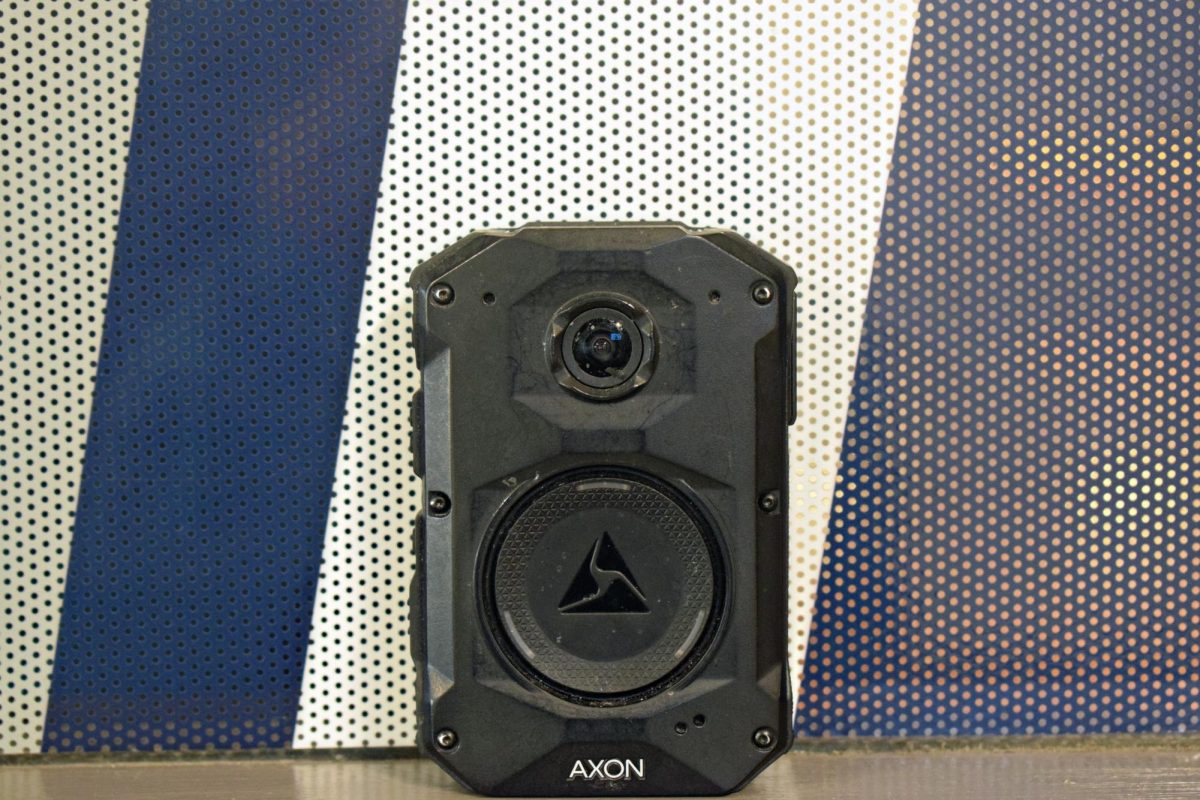
In response to growing public concern, ICE has begun rolling out a body-worn camera program to improve transparency and rebuild trust after recently pepper-spraying a 1-year old girl and her parents. The agency has deployed roughly 1,600 body cameras across Baltimore, Washington D.C, New York, Buffalo, Philadelphia, and Detroit. Officials hope to expand initiative nationwide, but further rollout will depend on additional funding from Congress.
“They prefer them because anytime somebody comes in to say, oh this police officer was rude, or this police officer says this, just pull up the body camera footage and it says, yes he did it, or no he didn’t do it. It shows it,” West Chicago police officer Mike Levato said.

The Washington Post recently published an article in which mention is made of U.S. District Judge Sara Ellis pointing to numerous examples of immigration officers using tear gas, pepper spray, and other crowd controlling devices in ways that amounted to excessive force and contradicted statements from federal authorities. She also pointed out that a senior U.S Border Patrol Commander, Gregory Bovino, said that he “admitted that he lied” about getting struck by a rock in the head before deploying tear gas. Rafael Verazas told the Washington Post that he got pepper sprayed all over his face as well as his family and his 1-year-old daughter who struggled to breathe.
These incidents reveal a deeper systematic truth, Transparency is impossible under ICE’s current oversight model. ICE is one of the few major U.S. law-enforcement agencies that conducts dangerous operations without consistent video documentation, they rely heavily on internal reviews, delayed investigation, and officer narratives that cannot be independently verified. When agents are not recorded, the official version of events often becomes the only version, regardless of whether it is accurate. If body cameras have been in use, the footage could have provided critical evidence to clarify the circumstances and gain transparency.
To rebuild public confidence and ensure fair treatment, ICE should require body cameras at all times: before, during, and after enforcement.Although the total cost can range from thousands to millions of dollars annually the government should agree on a way to provide more funding for body cameras and to properly train agents to use them. Without body cameras there is no transparency, the residents have their rights and should have access to the truth.
“I think almost 100% over the last couple of years the complaints that we’ve had, they’ve been disproven by the body cameras,” Levato said.


