



Yawns echo through classrooms, and whispers asking for Advil interrupt the silence. With school back in session, some West Chicago Community High School (WCCHS) students say their headaches have gotten worse.
Over the summer, WCCHS replaced fluorescent lights with brighter LED fixtures in the main hallway, STEP Center, career and technical hallways, physical education hallway corridors, and third-floor restrooms. Although these renovations continue a process that began five to six years ago, not everyone is welcoming the change. Several students report that their headaches have intensified.
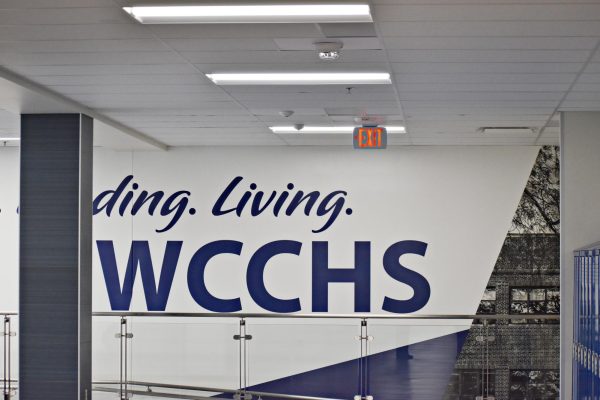
“I haven’t really noticed a difference [in the lights,] but I’ve noticed my headaches increasing: I’m in pain pretty much every day,” Montse Loa, a senior at WCCHS, said.
Senior Haylee Majer echoed the concern, pointing to the intensity of the new fixtures.
“I think it is way too bright in this school and we need to either focus more on natural light or dim the lights. If one light is off, we’re not gonna go blind and not see our paper,” Majer said.
She added that the change from older bulbs to LEDs has affected her health.
“With natural light I get less headaches, ’cause when they switched the lights over from what they used to be to LEDs it got so bright and I started to notice it mentally. Now I can’t go class to class without a headache,” Majer said.
A Wildcat Chronicle Instagram poll drew more than 100 responses, with 99 respondents saying classroom lighting contributes to headaches and only eight saying it does not. In a second poll with 75 responses, 69 students said bright lights make it harder to concentrate, while just eight reported that brighter lighting helps them focus.
Nurse Cathy Collins explained that multiple factors contribute to headaches in teenagers, and LEDs may intensify those issues.
“We see more headaches with the changing of the seasons, with allergies, or with the beginning of the school year, when cold symptoms are common. LED lights can contribute for students who have light sensitivity, but they aren’t the only cause,” Collins said
She noted that light is only one part of the problem, since other everyday habits also play a role.
“So you didn’t eat, you’re not hydrating, you didn’t get enough sleep, the brightness in the room, the brightness of the computer: it all can factor into it, absolutely,” Collins said. Studies show that 25% of high school students tend to skip breakfast, a factor Collins recognized as part of the issue.
Although some staff connect the lighting to health concerns, administrators emphasize that the switch was driven by efficiency and cost savings.
Executive Director of Business Services Dan Oberg said that 92 LEDs were installed over the summer. The estimated cost was around $200,000, though he cautioned that records would need to be checked for the exact figure.
“LED lights are more efficient and they last longer than other lighting, which is why we’ve been moving more of our lighting to LEDs – even the stadium lights,” Oberg said
Oberg added that fluorescent bulbs were more costly and required frequent replacement, while LEDs are designed to last longer.
The change has drawn mixed reactions among staff and students, with some questioning whether the money could have been directed to other needs.
“I think they should’ve spent more money on clubs or sports or repairing literally anything else in the building than replacing lights that give us headaches,” Emma Raucci, a freshman at WCCHS, said.
Collins suggested a possible compromise:
“I would like to see more classrooms have dimmer switches or light screens. Sometimes students just need a break from all that brightness,” Collins said.


