



(Este artículo está disponible en español aquí.)
As the new school year began, West Chicago Community High School rolled out updated safety procedures introduced by Executive Director of Operations and Safety David Pater.
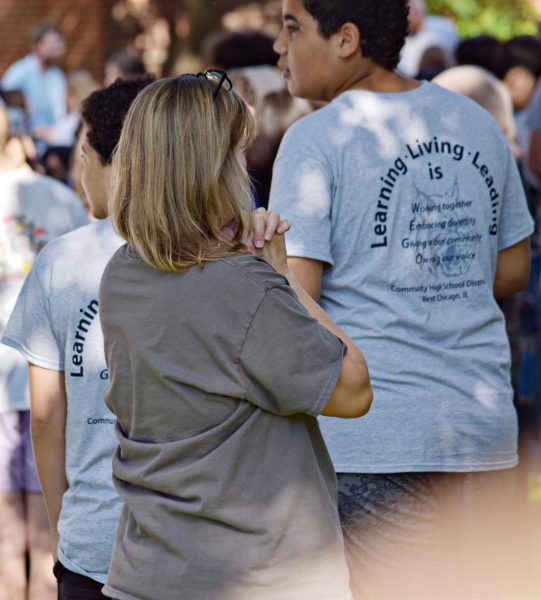
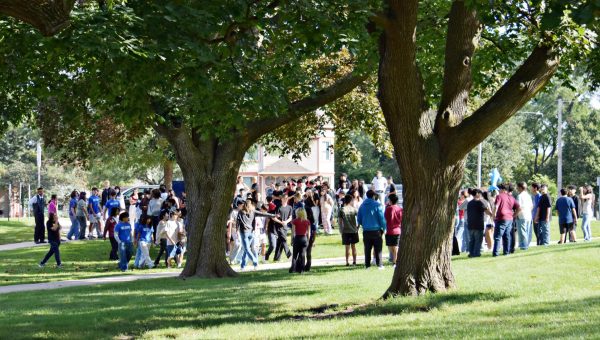
The school’s first-ever Safety Day, held during the second week of classes, combined a fire drill, a tornado drill and a lockdown drill to prepare students and staff for emergencies.
Students were notified several days in advance through den announcements and parent emails. In the past, drills were often unannounced. Many students and teachers reacted positively to the change, saying that completing three drills in a single day helped them feel more prepared than spreading them across multiple weeks.
Pater said the timing was intentional.
“A fire can happen the first day of school. A tornado could happen the first day of school. Unfortunately, a lockdown could happen the first day of school,” Pater said. “The sooner we get to it, the better it is.”
New procedures and communication
Beyond scheduling, Safety Day marked the rollout of broader communication tools. Pater emphasized the importance of consistent, visible instructions for students, staff and even community members who use the building after hours. New maps posted in large spaces such as the cafeteria and gym detail evacuation routes, tornado shelters, AED (automated external defibrillator) locations, and nearest exits.
“We’ve had these for a while,” Pater said. “But this year, we wanted to make sure everyone knows where to find them and how to use them.”
Each AED kit now also includes a “Stop the Bleed” kit, and QR codes have been placed on posters so staff can quickly access the district’s emergency operations plan. Pater said he focused on communication because student survey data from the state’s Five Essentials showed safety procedures were not widely understood.
“Even with basic communication, it makes you feel like there is a plan,” Pater said.
Locking doors and staff adjustments
One of the most visible changes this fall has been the policy requiring classroom doors to remain locked. Pater said research, including findings from the Sandy Hook report, shows that no active assailant in the United States has breached a locked classroom door.
“It is a little bit of an inconvenience for the day-to-day, but the bulk of it is to feel the safest,” Pater said.
Teachers acknowledged the adjustment.
“I’ve lost my keys and locked myself out a couple times, so it’s an adjustment,” science teacher Brianne Ferreiro said.
AVID teacher Nicole Stadler added that although she prefers to keep an open and welcoming classroom, she has shifted to the policy.
“Unfortunately, that’s not really the space we’re in with safety. So we just have to make sure the safety of the students is always the number one priority,” Stadler said.
Student perspectives
Student opinions regarding the new initiatives have been mixed, but generally supportive. Freshmen admitted to feeling nervous about the drills and the locked-door policy. Sophomore Joel Montgomery said the drills were “fun” because they broke up the school day, but also admitted they felt “unrealistic” compared to an actual emergency. Senior Olivia Vittoni called Safety Day “a needed experience” and said locking doors helps limit unnecessary hallway traffic.
Other students expressed concern about being locked out during emergencies. Pater acknowledged the challenge and said students should not expect teachers to open doors during lockdowns, as emergency personnel have keys. Instead, students may need to shelter in bathrooms, evacuate through the nearest exit, or adapt based on where the threat is located.
Looking ahead
Pater completed ALICE “train the trainer” certification this summer, which placed him in simulated lockdown scenarios. He said the training reinforced the importance of having a plan and practicing under stress.
“Having no plan versus having a couple steps – whether or not you have that – definitely aids in your evacuation and your safety,” Pater said.
More drills are scheduled throughout the year, including bus evacuations and a second lockdown during October’s Safety Week. Pater said he intends to introduce more realistic scenarios, such as blocked exits during fire drills, to encourage problem-solving.
“There’s always ways we can expand, but baby steps,” he said.
Despite the inconveniences, most students agreed with the overall goal, including one senior, who asked not to be identified for safety reasons.
“I thought it was good because we get to practice the drills again for safety, and we all know what to do in case of an emergency,” the student said.


