


One click. One “haul” video. One more package at the door. In the age of influencers, shopping has shifted from a necessity into a form of entertainment — one that is leaving closets overstuffed, wallets drained, and landfills overflowing.
In the past decade, social media influencers have turned shopping into a spectacle — unboxing thousand-dollar hauls and urging millions of followers to “add to cart.” But what happens when this culture of overconsumption leads to environmental waste and financial instability?
Overconsumption is the excessive use of resources and accumulation of goods and services. Fueled by social media, many influencers have gained recognition by posting massive clothing hauls and promoting constant buying from online retailers such as Shein, Temu, or AliExpress. These fast fashion brands churn out thousands of new styles weekly, creating an unsustainable cycle of buying and discarding. This business model depends on mass production, which drives continuous textile manufacturing and resource extraction. The production of textiles contributes to greenhouse gas emissions that grow yearly and cause significant environmental harm.
“Estimates suggest that consumers treat the lowest-price garments as nearly disposable, discarding them after only seven wears. For every five garments produced, the equivalent of three end up in a landfill or are incinerated each year,” according to a report from McKinsey & Company.
Apart from contributing to greenhouse gas emissions, overconsumption also contributes to the rise of landfills. Trends can last only days, encouraging a throwaway mindset where barely worn clothing is tossed aside.
A study published by the Journal of Marketing indicates that endorsements from influencers can increase consumer willingness to buy products by 50%. Constantly seeing others purchasing and using the same products naturally makes viewers want to try them too – often for the same perceived benefits, like clear skin, looking “prettier,” or being “cooler.” A Frontiers in Psychology study found that the more users see others buying, the more likely they are to want to feel like influencers themselves, even if that means buying things they do not need. Influencers usually portray a perfect life, therefore, when they advertise products, people will buy them to try to achieve the perfect lifestyle like them. People spend hours scrolling on TikTok or Instagram – and when they are constantly seeing products promoted as “life-changing” or “must-haves,” they are more likely to give in and buy. Phrases like “Don’t walk – run to Target” are everywhere. Even those who were not prone to overconsumption before may develop impulse-shopping habits just to keep up with trends.
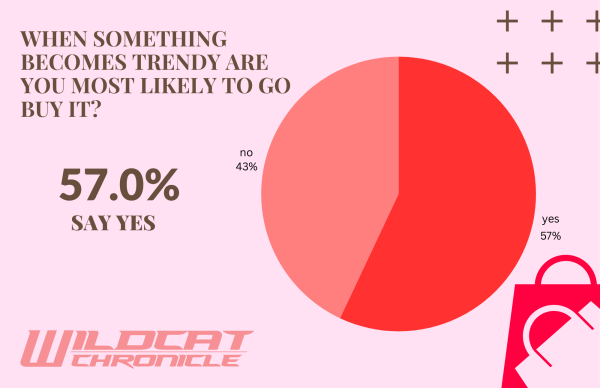
The same study that materialism is positively related to compulsive, conspicuous, and impulsive buying behaviors, with social media intensity significantly influencing these patterns.
According to Harvard Health Publishing, shopping gives a dopamine boost. Even buying something unnecessary can feel rewarding in the moment. But that emotional rush can create a cycle: people continue to shop just for that brief feeling — even if they never actually use the product.
An example of this was the Stanley Cup craze. Stanley Cups surged in popularity on TikTok in 2020, with users posting videos showing off their collections in multiple colors to match outfits. This craze led people to buy dozens of cups, most of which they did not need or would only use once. While some still carry Stanleys, other bottles like Owalas or Hydro Flasks are gaining popularity. That shift has left many Stanleys abandoned as new water bottles trend — with some ultimately thrown out.
As more natural resources are consumed and thrown out, they are being strained out of the planet, putting a lot of pressure on Earth to regenerate those resources. Shopping may be enjoyable, but it is not a right to consume endlessly — especially when it damages ecosystems and destabilizes the environment. The United Nations warns that if current consumption patterns continue, the equivalent of almost three planets will be needed by 2050 to provide the natural resources to sustain humans’ lifestyles. Every product comes from a natural resource, and the more people buy, the more those resources are used up – resources that the planet depends on to survive.
While influencers may not intend harm, the unchecked glorification of overconsumption fuels environmental destruction and financial instability. It is okay to purchase items you genuinely like, but when those purchases become impulsive and unused, they become part of the problem.
Consumers can take action by being mindful of the content they consume and questioning whether they truly need an item before buying it. Alternatives like thrifting can give products a new life and keep them out of landfills.
Influencers can also make a difference by researching the companies they promote and avoiding brands that rely on mass production. Everyone can take steps toward sustainability. Even small changes can have a big impact — not just for the planet, but for the people who call it home.