


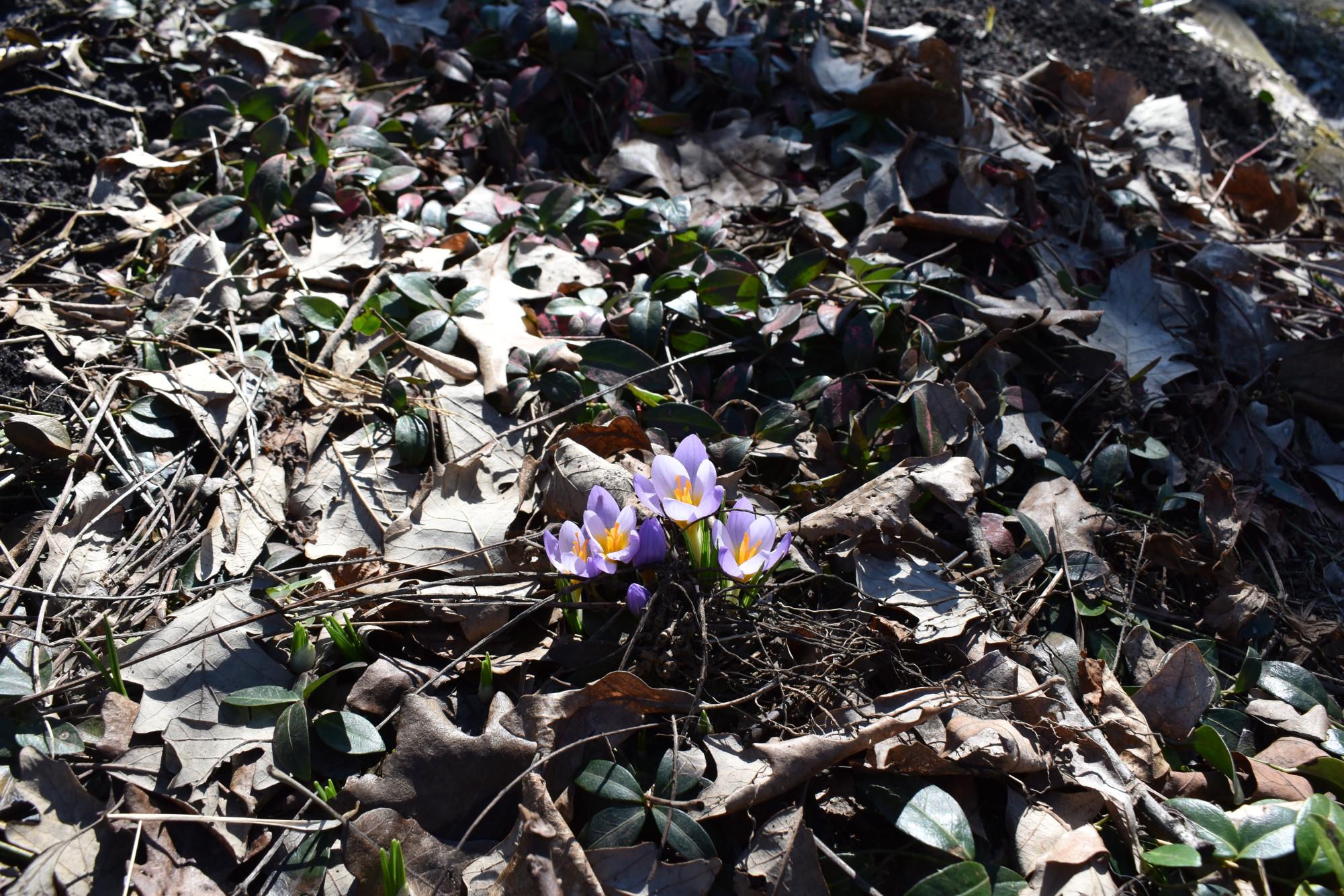
The sun shines on a bleak landscape. A few days later, rain cascades down, making way for a mesmerizing sunset. Just the next day, emerald green spreads over the landscape, and a little woodland crocus blossoms from the ground.
The purple flower typically emerges in early spring after exposure to full sun, standing at around 3-4 inches tall. The past two weeks of warmer weather, coupled with the downpour of rain last Friday, heralded the blooming of thousands of these flowers across northern Illinois these past 2 weeks. The buds of each of these flowers may have appeared this year as early as late February, one week after the last remnants of winter snow melted. The small flowers are on track to bloom three weeks earlier than usual.
“For people in West Chicago, it’s been a real reminder that the weather isn’t as predictable as it used to be. These rapid shifts can be stressful, not just for us, but for the local ecosystems too,” Environmental Science teacher Drew Plumb said.

The woodland crocus is not the only plant blooming. The Eastern Redbud, a common Midwest tree, has begun to sprout its iconic red buds. The tree has begun budding three weeks earlier than its usual late March start as well.
Punxstawney Phil, the infamous groundhog, may have been wrong. When the groundhog saw his shadow in the sunny morning light, he forecasted six more weeks of winter, leaving the official start of spring to be the vernal equinox on March 20th.
The weather suggests that spring may have come two weeks early. Although there has been a trend in recent years of unseemly warm weather. In 2025, March 14 saw extremely high temperatures for the month. Later that day, the Chicago area saw tornado warnings, and two days later, a heavy snowstorm fell upon the area.
Several tornadoes touched down and severe thunderstorms spread over the Chicago area on Tuesday, March 10.
Perhaps this weather is a “false spring,” a period of warm weather in late winter that tricks plants into breaking their dormancy during winter.
Just yesterday, snow swept over the Chicago area and completely covered the streets. The rain from Wednesday and snow slowly seeping into the ground have left the soil sodden, turning the ground into a muddy quagmire. The weather is forecasted to reach up to 70 degrees again by Saturday.

This significant decline in temperature could have detrimental effects on the flower buds and plant growth. The water inside flowers could freeze and rupture, causing damage to the plants and leading to a ruined and less colorful spring bloom. The early budding can also cause plants to weaken and become more susceptible to pests and diseases.
“Plants and animals rely on fairly predictable seasonal cues. When temperatures swing so quickly, it can confuse plants, such as flowering too early or too late, which affects fruit and seed production,” Plumb said.
Pollinators, birds, and mammals have been spotted emerging from their winter disappearance, but due to the rapid shifts in weather, they could struggle to find food sources, resulting in many animal deaths. Birds can be heard chirping as many have migrated back to their spring residencies prematurely.
“If the timing is off, it can ripple through the whole ecosystem, affecting everything from backyard gardens to the crops in nearby farms,” Plumb said.
The weather would hit the hardest for agriculture, especially as fields would produce fewer crops, which could lead to scarcity in stores for crops, mainly perennials with shallow roots. The lack of snow cover and dry conditions, along with the warm weather, could result in “frost heaving,” leaving plant roots exposed and unable to grow efficiently.
In winter, jet streams of cold arctic air and warm air from the tropics thrust warm winds far north. After the warm winds pass, cold fronts can linger and cause a rapid shift in temperature. The jet streams have also caused much of the high winds and tornadoes making their way through the Chicago area.
In the end, this erratic weather is most likely a result of climate change.
“These rapid weather changes aren’t just a one-off thing; they’re part of a bigger trend. Climate change isn’t causing every storm, but it’s making extreme weather more frequent and unpredictable, which can leave a lasting mark on the environment,” Plumb said.