

Escalation in violence within ICE


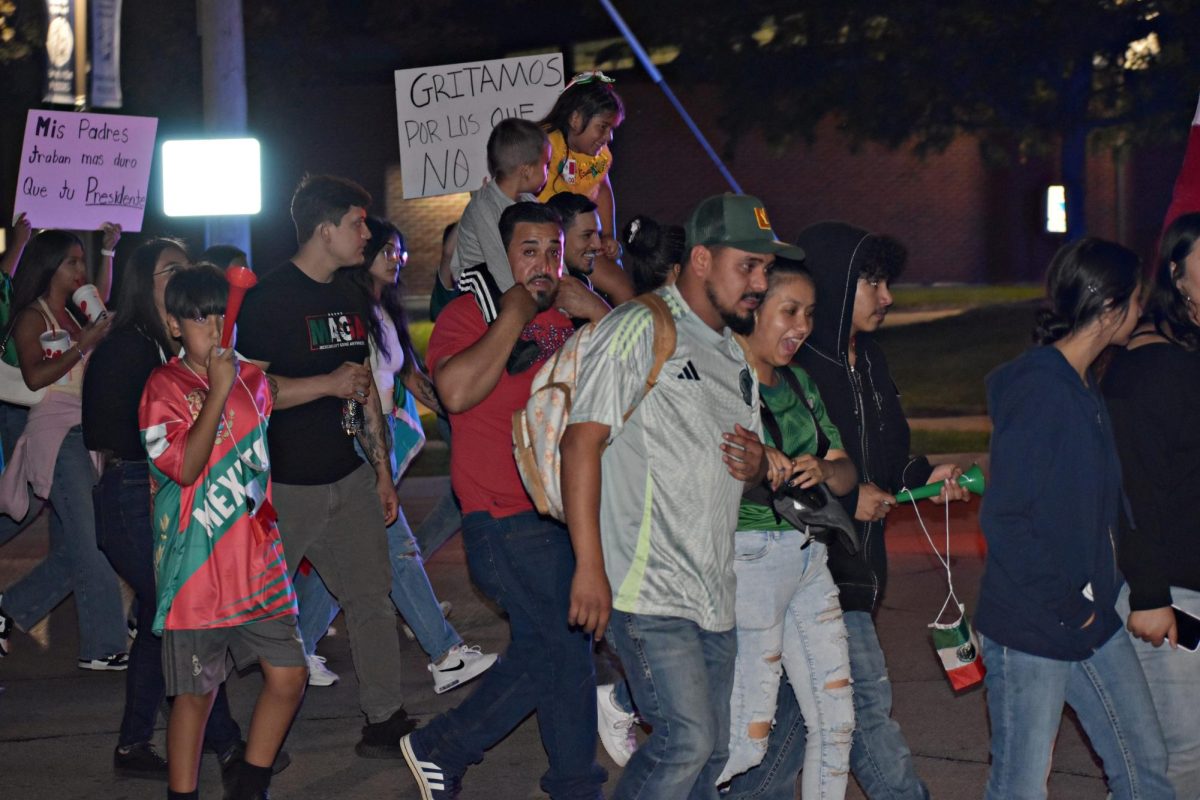
Walking down the streets of Minneapolis, Minnesota, the city lights and cold air hit those rushing to get home or cozy up while a light snowfall crosses the city. The lights that reflect on city buildings create a cozy ambience for the residents. Minneapolis has become one of many cities affected by reported incidents involving Immigration and Customs Enforcement agents, a city known for the killing of Renee Nicole Good.
Over the past year, the Trump administration has ramped up on ICE raids all over the country, all part of President Trump’s plan to “Make America Great Again.” Although immigration raids have taken place in America since the late 1800s, some speculate that the Trump administration has been intensifying its approach from past administrations.
“I don’t think we’ve ever seen a nationwide immigration enforcement effort like this,” John Sandweg, a former acting ICE director, told POLITICO Magazine.
ICE’s job, according to the Department of Homeland Security, is “to work hard to protect our country from terrorists, drug traffickers, criminals, and other people who try to enter our country illegally. They enforce the laws that keep American citizens safe.”
Both Kristi Noem, the Secretary of Homeland Security, Karoline Leavitt, White House Press Secretary, and President Trump himself have stated multiple times that ICE is going after the “worst of the worst,” including drug traffickers, rapists, and murderers.

Renee Nicole Good, a 37-year-old U.S. citizen, was a mother of three and wife to Becca Good. Good was killed by an ICE agent on January 7 after she was allegedly trying to run over the agent.
“The victim tried to ‘weaponize her vehicle’ to run over an officer near an ICE vehicle stuck on a snow-lined street before he opened fire,” Kristi Noem, DHS Secretary, said in a press statement.
Multiple videos of the incident have been released, each of which shows Good in her car while two agents approach the vehicle. One of the agents reportedly tells her to leave, and another tells her to get out of the car. When Good turns the wheel to leave, an agent tries to force open her door. Jonathan Ross, the agent who fired the fatal shots, moves toward the SUV.
Ross reportedly felt threatened when the SUV was driving, which is when he shot Good three times. Body camera footage later captured Ross using profanity following the shooting.
“If I remember correctly, I thought he was already in front of the car before the car started. And if that is the case, they are gonna say that deadly force is justified,” Mike Levato, School Resource Officer, said.
The incident sparked significant public outrage and division throughout the nation.
“I think what happened was devastating. I do think that the officer was acting accordingly in a high-risk situation,” a West Chicago resident and federal agent who requested anonymity said.
Some have other thoughts.
“I don’t think he was [in reasonable danger]. She was driving away from him. She did not say anything threatening to him. You could tell she was trying to de-escalate the situation.” Montalvo said.
The shooting was part of the department’s immigration crackdown, with close to 2,000 ICE agents deployed to Minnesota, following a welfare fraud investigation in the Somali immigrant community.
The killing of Good set off thousands of protests throughout the nation, especially in Minneapolis, but also in many other states and major cities such as Portland, OR, Atlanta, GA, Washington, D.C., New York City, NY, and others.
Days after the shooting, Ross suffered internal bleeding in the torso as a result of the incident, according to two unnamed U.S. officials.
Since this incident occurred, the states of Minnesota and Illinois have now both sued the Department of Homeland Security. Both state officials claim that the deployment of immigration agents to Minneapolis and Chicago, both sanctuary cities, violated the United States Constitution and infringed on state rights.
Federal officials defended the deployment as part of the administration’s immigration agenda in uncooperative states.
“This is a baseless lawsuit, and we look forward to proving that in court,” Trina McLaughlin, a spokesperson for Homeland Security, said to Capital News.
In response to the lawsuits, President Trump posted on his TruthSocial account that if the government officials continue to allow “agitators” and “insurrectionists” to keep “attacking the Patriots of ICE,” he will invoke the Insurrection Act, which allows the president to deploy federal forces, including the National Guard or military, in cases of civil unrest.
Earlier this week, the Pentagon put 1,500 troops on standby to be deployed to Minneapolis.
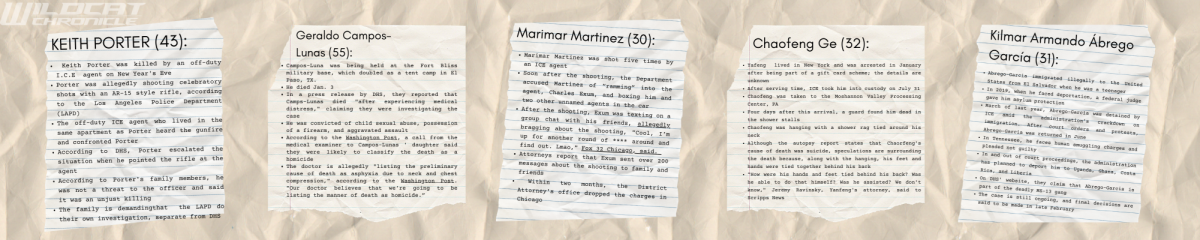
Reports from The Guardian indicate that ICE was at its deadliest in two decades in 2025, with December reported as the deadliest month, with six deaths in total.
Thirty-two people died in ICE’s custody last year, according to The Guardian. Many had recently arrived in the country seeking asylum, while others arrived decades ago.
The news source indicates many family members and lawyers have alleged that they died due to neglect by agents and DHS. Reported causes of death include heart attacks, tuberculosis, strokes, respiratory failure, and suicide.
West Chicago has experienced raids in the past several months, and with the escalation that has occurred in other states, many in the town worry about what that could mean for the community.
“It has been very difficult and upsetting to hear and see everything that is going on in Minneapolis,” a resident of West Chicago said. “I definitely believe there is a high chance of ICE activity returning, but with a more violent approach.”
Correction
Jan. 23, 2026
An earlier version of this article incorrectly spelled the name of Renee Nicole Good. The article has been updated to reflect the correct spelling.
Your donation will support the student journalists of West Chicago Community High School. Your contribution will help us cover our annual website hosting costs. We appreciate your support!