

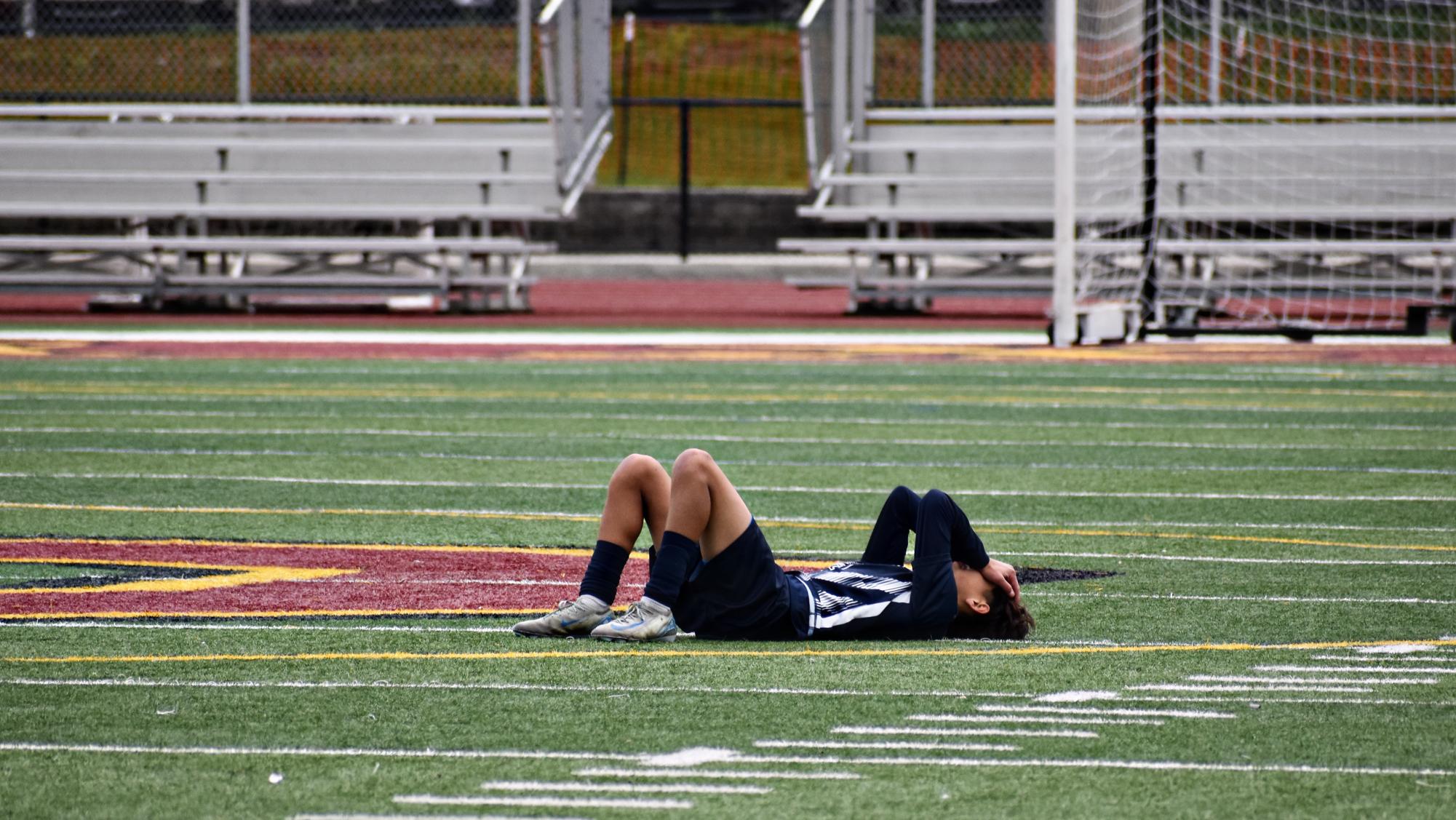



When Eli Tate was a sophomore, he had high expectations for his performance on the baseball team at Wheaton Academy – hopes that were soon dashed. He had competition for the starting position as catcher, due to a former teammate transferring back to the school, and was trying to live up to the expectation of being as good as someone else.
“I was too busy trying to be what I thought everyone needed to be. Instead of playing loose at the start of the season, I played tight and tried to do too much,” Tate said.
Tate experienced anxiety before and during games. Before, he would stress about his playing time and whether he was doing enough to stay in his position.
The stress sports put on the minds of athletes typically does not help them perform during games.
After spending his sophomore season “playing tight,” Tate learned that confidence – not just skill – determines success.
Across sports, athletes like Tate are learning to manage the mental toll of competition.
Performance anxiety as a whole
Athletic performance anxiety – a state of intense fear or nervousness – often occurs before a game or competition, under the eyes of a large crowd, after mistakes or missed plays, and while coming back from an injury.
The different types of performance anxiety can be categorized by:
Physiological symptoms: increased heart rate, sweating, and difficulty concentrating.
Cognitive symptoms: negative self-talk and fear of failure.
In a national poll, out of 200 high school athletes surveyed 91% experienced stress caused by their sport. One-third of them claimed it positively affected their performance, and one-fourth of them claimed it negatively affected their performance.
Locally, out of 101 individuals, 87.13% said yes to experiencing performance anxiety before or doing a sports event in a poll conducted on the Wildcat Chronicle’s Instagram Stories.
These numbers show that the mental strain of competition reaches almost every athlete, regardless of level or sport. What begins as excitement to perform can quickly shift into self-doubt when mistakes feel magnified by teammates, coaches, and crowds.
According to Occupational Therapist at ATI, Todd Cobler, performance anxiety can stem from an event that happened previously in their career.
A mistake during an important game can give a player anxiety, which can lead to worrying that the mistake will happen again. Making mistakes not only brings upset but also brings a fear of letting teammates, coaches, and the crowd down.
Youth players typically approach their sports games with a sense of excitement, as they compete for fun, but as athletes age, they feel more pressure during their sport, which then creates performance anxiety. Along with that, if they witness their parents getting upset on the sidelines of their games, either due to a play call or how the child themself is playing, this can cause performance anxiety going forward.
Performance anxiety that comes from crowds
For some athletes, the roar of the crowd fuels adrenaline. For others, it sparks panic.
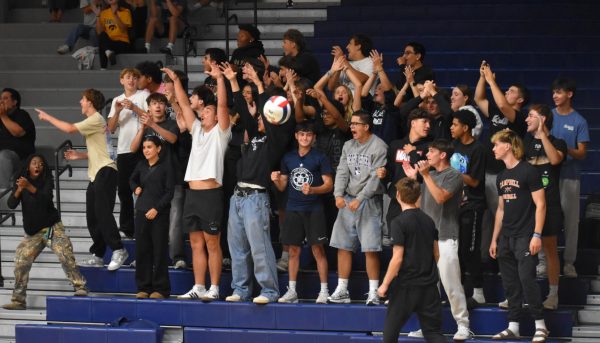
The term “home field advantage” has a positive correlation. The drive to succeed in front of a crowd that includes family and friends, along with it being comforting knowing one is competing on their home field, court, or turf. The atmosphere at a home field is intense due to the majority of the crowd being “home team favorable,” meaning they are often yelling, cheering, and adding to the tension during important plays. The crowd’s energy has an effect on the players on the field.
For a player, the crowd can encompass many different individuals. From parents who have watched one play throughout their whole life, to best friends yelling cheers, to even a crush coming out to support, all people within the crowd can bring many feelings to the athlete.
“Crowd influence is not universally positive,” Mental Game Coaching professional Bridget Montgomery, a mental performance coach based in said. “For some athletes, the same arousal that sharpens focus can spill into anxiety or ‘choking,’ where attention shifts from the task itself to worries about mistakes or audience judgment.”
According to Montgomery, athletes may “overthink, tighten up, and commit more errors.”
“What matters most is how athletes interpret the energy of the crowd: those who train themselves to view noise, pressure, and emotion as opportunities rather than threats are more likely to stay grounded, regulate arousal, and perform at their best,” Montgomery said.
Those sentiments were echoed by Grow Wellness Group’s Certified Mental Performance Consultant Eddie Perry.
“I definitely do think there is an impact with the crowd, especially if it’s the highest level,” Perry said. “You got over 60,000 fans chanting things at you. Maybe they know your number, they know your name, all those different things that can definitely impact the athlete. Some athletes thrive with that crowd, the pressure, and they embrace that environment. They want to go beat those fans, and they love it when the fans are quiet, because, I mean, they’ve done their job. So you kind of have both aspects, [the] negative aspects, and the positive aspects of the crowd.”
While professionals may have access to sports psychologists and media-training sessions, high school athletes often navigate these pressures alone. The cheers that fuel adrenaline for some can trigger panic in others – a reminder that crowd energy is powerful but unpredictable.
Coaches and Their Impact
Although performance anxiety is experienced within players, it can be helpful if coaches also know how to counteract these feelings and assist their players during hard, anxiety-driven times.
Varsity tennis captain Julia Koput expressed her struggles with performance anxiety during her 2024 season, which then carried over to the 2025 season. She was able to talk with her coach, who then helped her through this hardship.

“He gave me a pep-talk and reminded me it’s my last year, so I should focus on it being my last year, not just my last year to win but my last year to play for fun,” Koput said.
Varsity girls’ basketball and Varsity boys’ volleyball coach Jennifer Ward believes coaches are more successful at comforting their players during hard times if they know the player’s personality in how they handle things. If a coach understands how a player handles negative feedback about their game, they can adjust their approach. Doing so in the moment, however, is sometimes easier said than done.
“The drive to succeed. That’s the commonality amongst all athletes: they’re driven to achieve,” Ward said. “They respond well to tough coaching when nothing is interfering with that drive to achieve, right? And so there’s the paradox that’s the paradoxical conflict that we get into as coaches, right? You push them too hard, you’re putting pressure onto a kid who can’t quite handle it. If you don’t press them hard enough, they’re not going to rise up and achieve, and that will also be stressful to them. So on the paradoxical level, it’s very challenging,”
Ward’s reflection underscores the fine line coaches must walk. Motivation and mental health are intertwined; pushing too hard can break confidence, while holding back can stall growth. The best coaches, athletes say, learn to read the moment as carefully as they read the scoreboard.
Coping strategies and how to get through performance anxiety
There are coping mechanisms meant to help athletes get through times of performance anxiety: mental preparation for stress-provoking game situations, seeking help from coaches, teammates, and professionals, or developing strategies to cope during high-stress situations to counteract any possible anxiety to come.
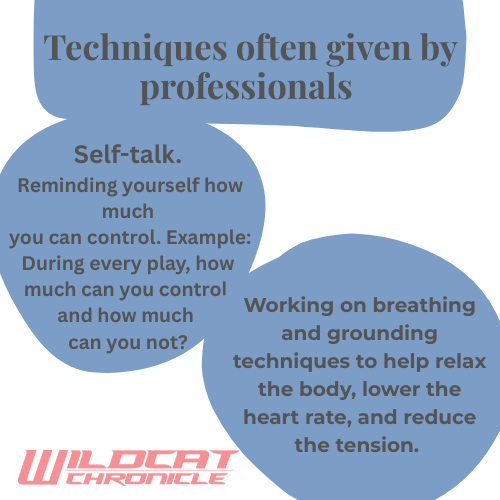
“I talked to my teammate Mia Canda about [my anxiety.] She said just focus on your breathing, breathe in three seconds and out two seconds, [and] that really helped a lot,” Koput said.
During now-Senior Valeria Ballines’ second season on the Varsity girls’ badminton team, there came a point at which the coaches decided to conduct a mental-focused practice to assist with players’ mounting anxieties.
“When we versed easy schools, we went into the game with the mindset that they were easy, and when we versed hard schools, we came into the game ready to play, so to combat that, she created breathing exercises during one Saturday practice,” Ballines said. “We all lay down on the floor in the gym and we went through breathing exercises to calm us down before practice.”
While these breathing exercises worked for certain players on the badminton team, these techniques to combat anxiety are not certain to work for all individuals. Exercises like these highlight how mental skills training – breathing, visualization, and reframing thoughts – can reset a player’s mindset as effectively as any physical warm-up. Building routines that protect mental health is becoming as essential to athletic success as drills or conditioning.
As Tate learned, pressure does not disappear – but it can be managed. For athletes at every level, success often depends less on skill than on the ability to breathe, refocus, and play for the love of the game.
“It’s okay to feel the nerves, it just means you really care about [what] you’re doing,” Tate said.
Correction
Dec. 11 2025
This article was updated on Dec. 11 to correct the place of employment of a source.